View the full transcript
Transcribed from the episode audio by AI, so it may contain mistakes.
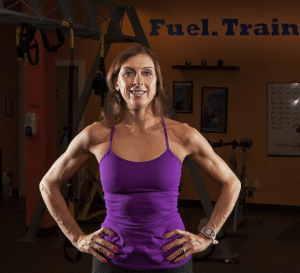
Ravi0:19Welcome to the Motivated Life podcast. I'm Ravi Raman. On today's episode, I'll be speaking with Debbie Potts. Debbie's been in the health and fitness industry for over 25 years. She's a finisher of over 15 Iron Man distance triathlons, including over five finishes at the Ironman Hawaii World Championship, where she's not only finished, but she's finished amongst the top amateur competitors on many. occasions. She's qualified for and run the Boston Marathon, and she's also a veteran of several ultramarathon races. So Debbie hosts her own podcast called The Whole Athlete Podcast, and she also has been operating a fitness studio in Bellevue, Washington, just outside of Seattle.
Her studio called Fitness Forward features small group training, where she helps busy executives and leaders and everyday people get really fit in a short period of time. She also does one-on-one coaching. Now, what's interesting about Debbie is, in addition to all her accolades in endurance athletics, she's also experienced what it's like to work so hard that you burn out. In fact, over the past five years, she's been focusing not only on becoming more fit, but truly stepping into a high level of wellness and helping her clients do the same.
She's learned the value of sleep and recovery. She's understood how nutrition is not only important to help one do well in sports, but also to feel good in daily life and to do well at work. And our conversation today roams over a wide variety of topics. We talk about nutrition and how we can think differently about our nutrition to be healthier and have more energy through the day. We talk about different methods of exercise. and also the role of sleep in terms of helping us be well and have high energy levels throughout the day.
We talk about the gut microbiome and gut health, hydration, and a wide variety of topics regarding fitness and wellness overall. So I'm sure if you listen closely today's podcast, you'll come away with at least a handful of things that you can start applying in your day-to-day life to be more healthy, be more fit, have more energy, and overall be well throughout your day. If you'd like to learn more about Debbie, I encourage you to check out her website. It's called Fitness Forward Studio.com. That's fitnessforward studio.com.
And her work is captured through a book she's written called The Holistic Method, holistic W-H-O-L-E-S-T-I-C, the holistic method. And it covers a wide range of aspects that go into being really healthy and fit and well throughout your daily life. So her book is really good. She also has a manual, a workbook that goes along with the book to help you apply some of the things she talks about. And I hope you'll enjoy our conversation today. and I hope it inspires you to take your health up a notch.
So with that, let's get on with the podcast. Let's welcome Debbie Potts. Hey, Debbie, thanks for coming on the podcast.
Debbie3:57Thanks for having me on, Ravi. It's been a while.
Ravi4:00So let me guess you've probably already swam, biked, run, trained clients. This is like your 17th meeting of the day. I mean, what's your day really been like today?
Debbie4:10Um, well, every day's different, but I do own a fitness studio and have clients. And I had, I did lift weights for 30 minutes this morning at 5.30. And then I had clients 630 until, um, like 11. And then I did go swimming at Masters at noon. Then I had clients and now meeting you. And then I have to do some payroll and scheduling and billing and stuff like that. So yeah, it's just a, a, a busy day. I was going to try to fit a bike ride in, but, you know, life is not a race.
I have to figure out how to fit it in.
Ravi4:49Right. Well, we can call podcasting the third part of your triathlon for the
Debbie4:52day. Yes. It's fun.
Ravi4:55So it seems like you have your fingers in a lot of different areas. You have a podcast. You've published a couple books. You train clients. You have a fitness studio, how would you describe what you do and sort of the mission behind what you do?
Debbie5:10Great question. That's always my challenge And we just had my mastermind group. I'm in, we just had a retreat last weekend And it's our focus is finding your purpose. What's your passion? Purpose and make an impact. And it is always my challenge of wanting to do too many things and kind of where I, you know, part of the reason we're talking today is talking about overdoing my days and overdoing life in general and doing too much, and that addiction to busyness kind of catches up with you.
So my, my challenge is I'd like to do a lot and I've had my own fitness studio in Bellevue for eight years now and you know, over the years you've kind of learn not to try to do corporate fitness and try to, you know, do personal training, then group training and these 21-day sugar detoxes and whatever business you're in, you know it's hard not to try to do everything and do it all yourself. So, yeah, I try to, you know, have different things. I did become nutritional therapy practitioner last year and add that into what I do.
I do have a podcast. I don't coach as many athletes as I used to do a triathlon team. And, you know, I've learned to pick and choose not to do so much. And we had a seminar last weekend of being a mastery of one, not a. trying to do being a master of you know half doing everything so yeah just a little bit everything what
Ravi6:37was the what inspired you to i guess create create this career around health and wellness when what was that spark that motivated you to move your career in this direction more
Debbie6:50the wellness what i call the holistic method i started doing hmm i think about when did i write I wrote my book, Life is Not a Race, in 2013, I started writing blogs about what I was going through my personal health. But a year before that, I think, I started learning more about, you know, personal training people for 25 years. And, you know, 46 suddenly. And I started personal training and doing fitness in college. And it started back then. But I've always been into nutrition and health.
I studied, kind of tried to do all that in college as well. and trying to learn a little bit, everything. And especially being a fitness trainer, you can't get results from people just exercising. And I realize there's a lot more to being healthy and being a health optimizer than just fitting in your training. And so a lot of my clients, you know, are CEOs, work full-time or their parents at home, they're busy people. And trying to get them just to work out 30 minutes, 45 minutes, an hour, twice a week.
I'm like, okay, what are you doing the rest of the time? It's the challenge of coaching people and trying to get them to reach their health goals, help them lose weight, help them move better, feel better, and look better. It's a lot, I'm just training someone or having them work out twice a week, once a week for some people. It doesn't cut it. There's a lot more to it to be healthy.
Ravi8:16So there's more than just what you eat and how you train. Yes. That's what you're saying. Okay. I want to go a lot deeper into this. Yeah. But first, maybe we can talk a bit about your background because people listening. I know of your background because we used to go to the same yoga studio and I knew of the events you had done. I didn't realize I was reading your website earlier today that you've done 15 Iron Man's and five world championships at Hawaii. You got into ultramarathons so I did the North Face challenge with you.
You smoked me. I saw you off in the distance. Back then. Back then. And so you've done quite a bit of endurance work, but your book, Life is Not a Race, it's a Journey. It tells the story of your achievement, but also a story of breakdown and burnout. And I'd love if you can talk about what it was like before the burnout, what you did in those few years, just to give people a sense of just the sheer amount of activity you were doing. And then what actually happened that created that breakdown and burnout?
Then we'll talk about how you came out the other side.
Debbie9:28Great. Well, yeah, it is, you know, climbing up mountain, getting them out. That's a chapter of my book, actually, getting to the mountain top and then coming down the other side and going back up. But it's, it is the challenge, I think, as I said earlier, trying to do too much. And if you're running your own business, you're an entrepreneur type of person or type A personality, put that into your work life. And then you also love fitness. And you love doing endurance events, training and getting into racing.
And it becomes, you know, this year round process that training is just your life. People would always ask me every day, when's your next race, debby? And it would just become known as debby the trathlet. Debby does marathons and she's always doing something, some type of race, and so I had this reputation of you know. Only vacations I went on were because it was around a race and, as I look back, it was probably true. But you know, I just started doing trathlons, just the short dancekin, fun ones, when I was 25 years old and started doing marathons and then cycling events and got into Ironman just with a group of people I knew and just thought, okay, and I'd as well do an Ironman.
So then I started getting better at him. I had Mark Allen coached me and was on their elite team. So then you start doing Iron Man's and you qualify for Hawaii. And
Ravi10:44Mark Allen is eight-time winner. Yeah,
Debbie10:47Mark Allen is an original Iron Man guy that would win Hawaii many times. And he's called the grip because he's always knew about the mental side of coaching and staying calm and relaxed. And so I was on their trathlon team. And so when you start doing Iron Man's and qualifying for him, you have other races that you do as fillers, just their training days. So then you start doing these other races and marathons and then 50Ks. They're just for fun. And you qualify for Iron Man Hawaii at another Iron Man.
So then suddenly you're doing two Iron Man's a year plus some halves and some sprint or Olympic distance trathlons. for a good workout. And then offseason, we're like, well, I might as well read a marathon. And then we got into the 50K trail running. So that's all on top of an already busy life of running my own business and trying to, you know, train clients all day, but it's also doing the admin time, doing the marketing, doing the accounting. I mean, you have to do everything.
So life catches up with you. And that was all until, you know, 2012. I was doing all these races, doing world championships. Did the North Face 50K in December. Then January came around 2013. I was doing Carlsbad Marathon. And then I was doing another 50K in February when I started going, hmm, something's not right. My heart rate's really high. I'm not, I was kind of struggling and seemed different and kind of went on from there of this downhill spiral.
Ravi12:20But so you were racing really well. Yeah. You set like PRs. I was. You did your first 50K. So everything was good until it stopped being so good. So, I mean, what were the signs that it was not just over-training? Because I can imagine if you're running a 50K, well, I know from my own experience that you're going to feel sore. But what you experience is something different.
Debbie12:44Yeah, I mean, I was always. Yeah, I mean, start in 2013 is when I started to really feel just tired And I'd have different injuries that you don't recover from, just like a hip pain or something, and then just nagging things because it's all related to your cortisol out of whack that we'll get to, probably, and I think it's feeling tired like I'd have to have to have naps every day and a big red flag happened actually five years ago. Last weekend, from right now, we did my master, my retreat I was speaking of.
We had it at Torrey pines, the same location, five years ago, and I just wrote a blog about this on my website because, because it was such a, it was going back to where it all started five years ago. And that's why I'm on this mission and thanks to you having me on the show to talk about life is not a race. It's a journey because five years I'm still healing and getting healthier and rebuilding and have to change my whole lifestyle. So when I went to this retreat last weekend, I got there and I was just very emotional.
I could just start crying anytime and it just weird was like going back to that place. where all this started that, you know, I had some wine. I couldn't tolerate it. I was sick for a week. I was just really reacted and I couldn't go for, you know, run and everything was just so difficult. And I just came off this high of an amazing triathlon season, running season 2012. And suddenly, yeah, it's that just nothing was working and feeling fatigued and just heavy.
Ravi14:21Fatigued and heavy. So, I mean, what do you do with that? Do you just take time off? How did you, you figure out what was going on and then start healing yourself?
Debbie14:32Well, fortunately, I was previously about a year before. I was already getting into Ben Greenfield. I was on his superhuman coach program he started doing back then and learning about adrenal fatigue, heart rate variability. We had just had a conference at March and with Brock Armstrong and Ben and they had different speakers as Dave Asprey and Rhonda Collier. Yeah, so all these people were there speaking and it was in March, 2013, when all this was happening to me, and I started realizing, oh, wait, I have all those symptoms that are talking about, you know, heart rate variability and, and which measures your nervous system.
And so all this stuff was happening. And then I had my retreat. I was just speaking of this girl. I was actually going to Dr. Kayla, a program that I was, I've interviewed him on my podcast and listened to him on other podcasts. And he talks about adrenal fatigue. And I had this gal in my group, and my mastermind happened to be a student of his needed a case study, a case client to practice with. So that morning after I had too much wine to drink and I wrote a whole chapter on at the bus ride from hell, I think, that I ended up being her case study.
And that's when I started realizing case something is wrong with me. I'm not right. And that was kind of started, I worked with her. And then I started, you know, looking at different people locally because I felt like I need to see somebody. And that's why I wrote a lot about in my book that I saw eat different people, started reading things. And really was trying to find the quick, quick program, I think, and just get better in six months or six weeks. And then it ended up being six months.
And then a year, now it's been five years.
Ravi16:13So what's shifted now in your, I guess, training and diet that's helped you? And also, I'll say, I'm making an assumption here that what you experienced, you know, you did a ton of training. and events and got to this point. But I'd imagine you probably run into people who have gotten to the same level of fatigue and breakdown just through stress, through overwork. Yeah. Right? It doesn't have to be doing an Iron Man every month. Exactly. It could be just the stress of
Debbie16:41life. It's fill in the blank. You know, life, what I'm doing from the time I wake up in the morning until I go to bed at night. If you're addicted to busyness and doing too much, it's in nutritional therapy, we call it a beaker of stress. Like, say there's a beaker over your. your brain and it's accumulation of all these different stressors. Your brain does not interpret one from the other. It could be because you just worked out too much. It could be because you're freaking out about rent.
You have to get clients. You have to market. You have to do this and this and this. Or you're, you know, taking, I see parents all the time just struggling with their kids and their spouse and da-da-da-da. You know, it doesn't matter what it is. Fill in the blank, whatever you are feeling stressed and anxious about or doing too much every day. That's other thing is I was packing my days up. And I know a lot of people I've coached is that they work full-time or they, you know, work crazy hours.
And then they fit in on top of that full-time job training for a race. And that's where I see a lot of people that train for these races. Endurance events take a lot of time. And then they're trying to fit in 15, 20 hours of training on top of a 50-hour work week and then having a family at the same time and try to keep that great. And so for me, I had to restructure my days. I have to cut down to the workouts. I leave more time in between things.
So I'm not just going. You know, Master Swim 12 to 1. I have a client at 130. I'm going to swim exactly the whole workout and not miss the last part. Now I'll get out five minutes before if I, so I don't have to rush. So it's not rushing is my big problem, or rather I like to say area of opportunity, It's like it's not a negative. But what do I need to improve on? And that is allowing more time between things, so I'm not rushing around all day long because you start to feel like anxious and your shorter breath even.
You know that's our podcast recording today. I knew, okay, I have 30 minutes from when my clients leave until I have to get home and, of course, traffic it's Bellevue seems to be always backed up now. So I wasn't sure and I have to slow down, do some deep breathing in the car and not feel anxious at because I have to be on time And so I get freaked out if I'm late for something. So there's a lot of things like that, just changing.
Ravi18:58Maybe we could talk a bit, you know, in your, the holistic method, which is how you, is it holstick or
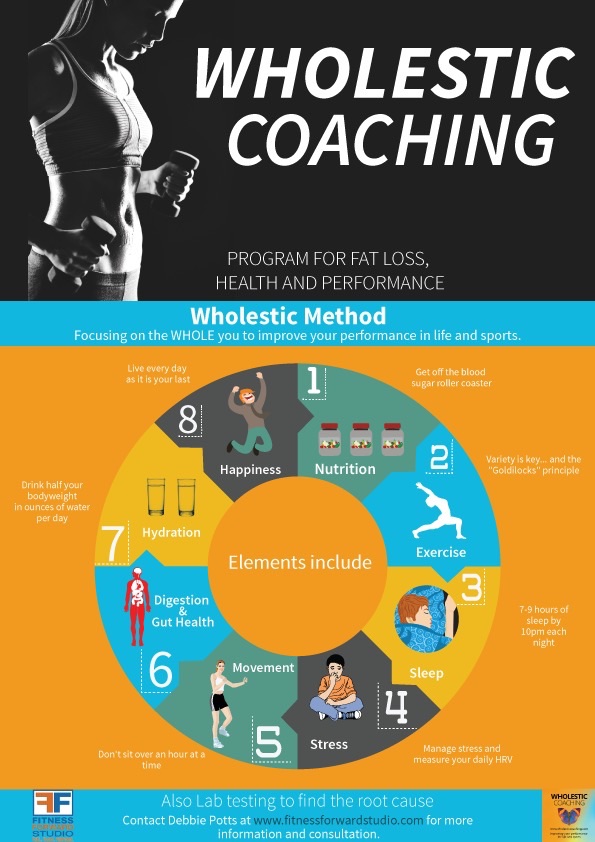
Debbie19:06Holistic. I change, So I know the I spell it weird because I wanted to make it the whole you And it's the holistic method And it's it's transforming the whole you from the inside out and to be an athlete of any level. But it's really looking at what I say. There's eight different elements and there's more than that that really need to be addressed to make sure you're you know, burning fat, you're optimizing your health and you're improving performance in life, as well as your sport of choice.
And I think, just for people to be healthy, for just living life every day, we need to look at these different elements that I talk about in the book and I think it's so important to health.
Ravi19:48and maybe we could talk a little bit about if not all of them a few of them and with the lens of what you've learned and experienced through your own journey on the nutrition side what are some of the things that you've learned in your own recovery and getting through your breakdown um i mean is fat bad
Debbie20:09Or good, you know, like that's a whole, like 10 series, podcasts, probably. So what I just kind of summarize the eight elements I find that are important for people to improve their health is nutrition, as you just said, exercise, sleep, stress, movement, digestion and gut health, and hormones are kind of rolled into one there, and then hydration and happiness, So which is? I think they all impact one and other, So one of those elements is out of balance or out of whack. The other seven of the eight are going to be impacted.
So we need to, when I coach people as working on all these areas, are we all in alignment? So nutrition and nutritional therapy, I talk about this on my podcast a lot because I find this is so important because we used to always talk about eating fat and my fit fat fast, original podcast. And in nutritional therapy, we work on everyone's bio-individual. No one's the same and everyone's different background. Like your ancestors, my ancestors, everybody's different as well as your genetic makeup. So what you should eat, we all agree, I think, on real food.
And what we say nutritional therapy is working on what macronutrient ratio do you need to feel full, satisfied, and energized after you eat, right? So you want to be full, and I tell my clients, I want you to eat the right amounts of foods to feel full for four hours, five hours. You shouldn't have to eat three meals and two stacks and, you know, just get the right. For me, I need more fat and protein and vegetables are going to be my carbs. I stay away from the starchy carbs.
That's me personally to think from my background of eating only carbs and fat-free everything from my whole younger life that I kind of screwed myself up. So now, for me, I eat mostly kind of more of the fat and vegetables and protein kind of style. You
Ravi22:06train and work with a lot of, you know, you said CEOs and other professionals, right? Yeah.
Debbie22:12My clients are not – they're not – they're not – they're people that work. I'm in Bellevue. There's a lot of people that are Microsoft and, you know, tech companies and all sorts of different companies that they work for. So, yeah, they're just people that work high-stress jobs.
Ravi22:29From the nutrition angle, are there a couple small shifts or things – it could be there a couple common mistakes you see people making with their diet or a couple small tweaks they tend to make that have a bigger impact? Is there anything like that that you've noticed?
Debbie22:45You know, everyone's so different, so it's hard. I think a lot of times it's looking at, you know, taking out gluten and grains, processed foods for, I do 30-day challenges with people and just, you know, take them out. Alcohol. Everyone drinks so much. I can't believe how many people drink every night, you know, a glass of wine. That's what they do. Or they go out for work events. My guys that are in CEO, had guys in construction companies. They have events every week. And a lot of clients, and it revolves around alcohol.
And so I think eating out in different work environment is teaching them how to plan ahead. So Sunday, know what your social schedule is for the week ahead. And let's plan out how you're going to go to those events. Maybe if it's eating beforehand or, you know, not eating everything that's there. I think the biggest thing is not what they're eating, but how they're eating, right? So it's not it's what we eat is really important, but how you digest it and how you absorb those nutrients is key in nutritional therapy as a nutritional therapy practitioner.
We're working on digestion, blood sugar regulation, essential fatty acids, mineral balance and hydration are the pillars on top of eating a real food diet. So it's people wolfing down their food, rushing really fast, working on the computer and eating and having that's where a lot of our digestive issues come. from I find is is being sympathetic nervous system and not eating in the rest and digest nervous system, which is the parasympathic nervous system. And then also eating too late to bed that they get home, they eat really late, throw in all this food and they go to bed.
Well, when we're sleeping, we should be in a parasympathic, nervous state, rest and digest. Detoxification happens there while we're sleeping. That natural housekeeping service, our rejuvenation, repair, recovery all happens when we're sleeping. But a couple things. Stress takes priority over everything, so everything else is shut off and digestion takes priority over detoxification. So if you're eating and going to bed, you're probably not detoxifying while I sleep. So a whole other area, but just what I think takeaways from what people should eat is what you asked me.
I don't think I really answered it, but I think it's just eating slower, chewing your food and focusing on what you're eating so you actually taste it and enjoy it, be satisfied now.
Ravi25:10on the the gut health, we can just go there because this is an interesting topic. Interesting topic. I mean, can you just pop a probiotic tablet and solve the problem that way? You're saying something deeper than just.
Debbie25:21I'm finding it's learning more about your. So go to adrenal fatigue, adrenal exhaustion. It's chronic stress, chronic busyness. You're overworking your system but really it's not the adrenals that are the problem. It starts north, So go to your brain. Your hypothalamus message interprets as stress and then it tells your maturity gland for the adrenals to release cortisol. So the hormone cortisol gets out of whack in people with too much activation of stressors. So if you are stressed when you're eating, it's a big problem. When your digestion, your gut health, your immune system is all going to be impacted.
If you are stressed, so you can take a probiotic and that is great. I suggest everyone has a probiotic and mix up their strains of probiotics so they're having every month. But it's about you know the nervous system is saying and managing that stress because that's going to throw off. Because, getting into my areas of opportunity, what I'm still healing from is blood sugar gets unstable. Every stress response is a blood sugar response. So even if you're doing low carb, I'm a fat burning machine, but if I'm always activating my adrenal system, my chronic busyness at chronic stress and anxiety, I'm increasing my blood sugar because you have to respond, run from that line.
I got a quick response. So if I keep having that jumpiness, that freak out, stress, whatever it might be coming from, your blood sugars increase. So the result is insulin resistance. Okay, and then, so you get that. And then also, if your stress is on, your immune system's down, dampen, depressed, and your digestion is off too if stress is on. So you're going to have leaky gut, gut problems, digestion problems, blood sugar instability, and then that's all going to impact the liver. So that's what all this stuff is this whole domino effect as well as hormone imbalances from that chronic stress and busyness.
So what we eat is just as important as looking at those other elements we're getting to is the gut health, but the stress and the sleep. So they all impact the other. Yeah,
Ravi27:34they're all intermingled. And on the stress, piece, I guess. I'd love a world where people did more yoga and did more meditation. Yes, of course. You made a good point earlier around just having more time in the day, which is something I coach my clients to have buffer, have time. People tend to be more creative also, and they solve problems better when they have more time in their day. What else have you seen on the stress side that you've done to just help with that area?
Debbie28:05I think it's really learning about yourself and becoming aware of those red flags. So writing, blog, or journaling has really helped me. And I have my clients when I coach them is do a gratitude journal. So every night before bed, write at least three things in a little book by your bedside table that you were happy about today, that made you laugh or made you laugh. me something someone did for you or that you did for someone else. That really helps. For me, my, I actually do great if I can go for a bike ride.
I think you say creative brain, my brain and I just process everything because I'm not, you know, on my phone because I'm riding my bike. And I'm just unplugged. Hopefully you're not on your phone if you're riding your bike, though I've seen people do that as well. I stay off my phone and just I unplug, disconnect. I think if you can go for a walk and not have your phone, I'm really. tired of people walking and looking at their phone. I was in Torrey Plains other weekend for that retreat and walk.
I'd go for a run in the morning and they go for a walk when I could afternoon when we're done our sessions. And these people are, you know, not even looking up. They're looking at their phone walking. I just wanted to say, stop, unplug, disconnect. And I always tell people to reset, you know, alternate control shift, delete, you know, reboot your system. You got to turn off your own body, brain.
Ravi29:26Now, on the exercise piece, You know, I know there's no one-size-fits-all. I personally right now love hiking. That's my primary form of exercise. It sounds like you still bike and swim and do your weights. You know, there's busy, most people listening are busy professionals. They have high-stress jobs, so obviously seeing that as a key component to wellness, I think, is a key message that you've communicated and have in your books. But from an exercise standpoint, I mean, if someone's listening and they only have like 30 or 40 minutes a couple times a week to exercise, but they're already working hard and stressed, I mean, what?
Counterproductive, right? Yeah, yeah. What would you recommend? I mean, what do
Debbie30:16you do? What would you say that person? It's like what you're saying. You're saying, okay, why should they go? You're kind of saying, why should they go to high intensity interval training when they're already stressed out? Is that what you're saying? Like why do we go work out and go, we're stressed out already and we're exhausted, and then we go do a workout that just kills us more. Yeah. So I think you, I have, I think working out, I just take clients, we just do 30 minutes.
That's all you need. You don't need an hour, two hours in the gym. You can get a lot in. We do work on mobility, flexibility, strength, heart rate intervals when appropriate. And I like to use heart rate monitors. We use in my studio called My Zone that has color-coded for each heart rate zones, kind of what we've did for years of heart zone training with Sally Edwards. We've always kind of, you know, you work hard one or two days, but the other days just do a green, just go for a walk, low heart rate and kind of the Maffetone heart rate stuff for athletes.
And you know, if you're having a stressful day, I would just do something low-key do more mobility, do yoga, do Pilates, do stuff that's more calming rather than over stimulating your body. That's if you had a hard day. But you know, I think it's testing. If you want to test where you are, you can do sweet beat app or one of the other heart rate variability apps to test your nervous system to see. All right, I'm already whacked out and I shouldn't go do a hard workout because I'm just going to make myself my muse system.
So when you say heart rate,
Ravi31:47various heart rate variability can you describe what that is and how it can indicate if you're overtrained or
Debbie31:54yeah you haven't have you never done it i
Ravi31:57i haven't done it personally but i'm intrigued
Debbie32:00Yeah, I love it. I honestly I haven't done it recently. It, if I didn't get up at 430 the morning, have clients of 530. I would have a different routine in the morning but it would involve five minutes. You put a bluetooth type of heart remontor on. It's an app I work with ronda collier so I use sweet beat life that they developed and it's measuring the beat, the time climb between each heart beat. So it's a variance between beat to beat In that their program there's different ones.
They'll create a different number. They're on a scale and make it simple one to a hundred. So 100 means I'm feeling good, I'm healthier in my nervous system. If you're lower, your nervous system has more stress. You also can look at the data on the screen. If you push a button you can flip the screen and look at, figure out your sympathetic nervous system to your parasympathetic nervous system and how the ratio of the two. So you want to have resiliency to be able to go sympathetic to parasympathetic and that's a huge thing.
Now I'm finding is we've talked a lot about it, my podcast about sympathetic dominance that we're so sympathetically stuck over there we lose that ability to shift back and forth to parasympathetic nervous to sympathetic. So So heart reviewability is a good type of biohacking way to see where am I today? And that might dictate if I'm going to do a high-intensity interval training workout and do some strength and add some mountain climbers and some burpees and some heart rate stuff that'll get red zone and come back to green zone.
Or if my, you know, I know usually I'm feeling healthy and I'm good, my heart rate variability's around, say, 85, 90, great day. Well, if I know I overdid it in life or my workout, previously, my number might be 70 or 65 or some people are lower than that. You know, that's going to be when you're going to yoga. Or I know a lot of yoga classes around me are not so great yoga. They're more high-stressed yoga. I know the hot yoga above my studio, they make more noise than we do.
So a yoga that's going to help you relax, restore and repair some more like a meditative type of yoga flow that you're moving through it. how you taught us, and then, you know, going for walk instead, so lower heart rate. So that's what heart variability, I think, is beneficial for. It's to kind of check in with yourself. It's a great way to see what's going on inside in your nervous system. Yeah.
Ravi34:30And the other two elements, so let's talk a little bit about sleep and hydration. And we could talk about happiness a little bit, too. Happiness is a big one. Yeah. Yeah. I think we'll need a new podcast on that one. Because that's my jam. So we'll touch on that one. So from a sleep perspective, I'll just share one thing that I discovered in the past year. First of all, I got blackout shades. Yeah. And then I just decided to go to bed super early and wake up super early.
Yeah. And I realized that, I mean, I'm in bed before 9 o'clock. I'm asleep by 9. Hello.
Debbie35:08I get about at 6. I have to sleep at 7.30. And I'm getting ready for bed around 6.30. Really? Okay. So don't feel bad. I'm earlier.
Ravi35:17Oh, my friends. I mean, my friends just, I hear no end of it. But I realized I'm just eight hours of sleep for me from nine to five is so much better than even 10 hours from like midnight to 10 or anything else I may do. But what have you discovered from a sleep perspective for yourself and for your clients? Well,
Debbie35:37that's in my book. I've agreed. The holistic method manual is a chapter in each of these topics. And I put all the interviews. have done in my podcast, the whole athlete podcast over the years, into this book. And as all the experts that I've interviewed into that chapter in the sleep, Dr. Maffetone went over the different brainwaves and the sleep stages I pulled from other sources into there. And I find for me, sleeping is key. And I really take, ever since my adrenal exhaustion began 2013, really, when the major red flag of adrenal issues, I'll back up to that.
is waking up at 2 in the morning, being wide awake. So cortisol should be down at night and the melatonin should come up. And so a big sign of you're overloaded and you're having internal overload of the circuit breaker system, you're going to have that wake-up call at 2 in the morning. And that also could be what you're eating before bed, throw your blood sugar out of whack. So sleeping is big and I freak out if I don't sleep. So I've done, you know, different things I read in bed.
And usually reading puts me to sleep, so I have to read at least three pages to get. It's always my goal Sit and read. I have some Pandora. I put some sleep music on, so yoga radio, meditation radio, to have that in the background Just help, kind of a spa sound. I do have the room dark and I cover my alarm clock because it's so bright. But I must say two months ago, almost two months, I dislocated my toe walking into the wall because my room was so dark and I went from the bathroom and my husband, Neil, was gone and I went from the bathroom to turn off the lights and walked to the bed and somehow, after 10 years walking the same way, I walked into the wall.
So there's some hazards of being too blacked out. Leave your bedside table on before you get into bed, so just having a dark room and having no lights I do have the dark curtains and just going to bed. If I know I have to wake up for work, I have clients of 530 and so I have to wake up really. So I try to change. I don't do stuff at night. Those two nights, three nights, I have to go to bed at 7.30. Tuesday, Thursday nights, I work till 7s, but I go home.
I don't eat dinner. I just get ready for bed and kind of unwind by reading. But yeah, I need my eight, nine hours or else. I'm working with people all day, so I have to be happy. Debbie, I can't be irritable because if I don't get my sleep, I don't really have much patience. and that's not good for a studio owner working with people when you have no patience. You're grumpy. That would be bad
Ravi38:18for business. So hydration. Should we just be drinking more water? Is that
Debbie38:24the deal there? Yeah, well, the hydration is, your body is a lot of, as you drink water as we're talking, hydration is key and a lot of people don't understand your body needs water to make everything happen. And the Czech Institute that I'm certified with, Paul Check, they say same thing as Nutritional Therapy Association. We all need half our body weight in ounces of water per day. So whatever you weigh, put that in half. So when you weigh 200 pounds, you need 100 ounces of water day.
And if you have diuretics, coffee, soda, juice, anything that's going to make you dehydrated, diuretic, you need additional glass of water to another 12, 16 ounces. for everyone. So that's a lot of water. Should you pound it all at night? No. You should drink it throughout the day. A lot of times I have people have some sea salt for some minerals in their water and especially in the mornings. And that's even more important if you're mineral deficient, which most people are and drink that water so you're retaining it as well.
So drink it, but make sure you're not just going in and then out the other end.
Ravi39:34Right. Well, on that point, I know when I've been eating a 100% whole food diet for short periods of time, I'm getting a lot more natural water in my food. If I were to go out and eat pizza and pasta, I've got to, I'm just dehydrated, whereas if I'm eating a ton of whole fruits or, you know, just fresh whole vegetables, I feel more hydrated.
Debbie39:55Yeah, you're probably getting water in the, if you're like cucumbers and lettuces, stuff like that, is more watery. But, yeah, most people I know don't drink enough water. They just have a cup in the morning, but then they have too much coffee, you know, a lot of teas can make you dehydrated. So it's, you know, and people I know think they're drinking ice tea. That's just as good. So I always have to say, you know, switch back and try some water or maybe add some mint into it or have some lemon and lime slices, something like that.
But a lot of people are so dehydrated and you can tell by your skin and your veins in your hands is that one of the tests we do in nutritional therapy. We do a whole functional evaluation to test all these body systems.
Ravi40:38So you should see the veins sticking out. Yeah,
Debbie40:40one of the tests is lifting your arm up and you can see if your arm hangs down to coming up. If your veins disappear, you're more dehydrated.
Ravi40:47I'm pretty dehydrated, I think,
Debbie40:50right now. Yeah, it is hard. I just added infrared therapy treatment to my studio to add with our nutritional therapy practitioner program and sitting in the infrared, I have to make sure people are having some minerals in their water afterwards. and rehydrating because you're sweating out water and toxins when you're doing that, but most people have to drink a lot more water because they come in dehydrated, so you have to be careful.
Ravi41:15So we just have a few minutes left. Let's touch on happiness quickly, and we may have to do a part two later on more about this. But where does this fit into the holistic method?
Debbie41:27Well, why is it your jam happiness? Well,
Ravi41:30My jam. I mean we, you know. If we're, you know if we're not, if we're, you know if we're, If we're going to put in effort in our careers I work mostly with professionals if we're going to spend the best hours of the best years of our lives doing something, it's important that we find a way to connect to something that brings us meaning and happiness in the day, And I find that people are most creative, most innovative, most productive when they're happier. It also, and when they're happy, they tend to take better care of themselves and other people as well.
is what I've noticed so it's good all around
Debbie42:07Yeah, I definitely believe you know being doing stuff that makes you happy. Playing is more and I know people in fitness industry that are teach workshops or doing two people I know are doing focused on play and I think a lot of times people are stressed out so much they don't allow time for joy in life and doing the stuff, doing activities that makes your soul sing, it makes you smile and being around people laugh. So part of my program is doing the gratitude journal at life but also detoxifying your life.
So I wrote about it in my book, in the manual, that sometimes you have to people that cause you stress and are not, they're energy robbers that you might need to clean house a little bit in your life. So finding people that you're around that bring you joy, bring you happiness, make you laugh. The other night I had we had dinner for my husband's birthday 12 people and my friend, whose client of mine made me laugh so hard. We were crying, you know, just laughing so much then we couldn't stop and then you're laughing because she's laughing and it's just that, it's just so therapeutic and I think a lot of people forget that and we just get so serious in life that you know it's life short and actually my client I just had previously to this our show today has his mother's boyfriend.
She's like 80 and her boyfriend has three hours to live. And I said, wouldn't that be interesting topic to write about blog? If you had three hours to live, what would you do? And I think that was a good point that, you know, are you happy doing what you're doing? If your job's not happy, how can you make it better? Or when you're not at work, what can you do? Another example, I just got a rebounder, those little trampolines. Like Tony Robbins. Yeah, I mean, I wanted it a year since I studied detoxification in your judicial therapy school that helps your lymphatic system because a cardiovascular system has a heart to pump and move the blood flow, but the lymphatic system doesn't have a pump to move the lymph fluid, which is that toxins we need to eliminate.
So I finally bought a rebounder and I'm like, why does this make you feel so happy and laugh and smile? Because everyone gets on there and you're bouncing. You feel like you're a kid again. It brought joy and it bring smile to people's faces. So anything you can do in your life to get grounded, get connected, like walking outside and your bare feet on the grass is always suggested, you know, going place, going more weekend vacations or going for a hike, like you said. I mean, I think people get so stuck in a rut and they just are unhappy.
Ravi44:47Yeah, yeah. You know, what's that mantra, no pain, no gain? I think it's no pain all gain. Yeah. Somehow, somewhere along the line we equated working hard and being in pain with, with being good. And working hard can be fun, I guess, sometimes, but until it's not. And I really appreciate you sharing your message. And a message that one of my main takeaways of reading your books is it's not just about nutrition. It's not just about biohacking the perfect exercise or just fine-tuning your diet. It's really about integrating all the different parts of your life in a way that brings you happiness and joy.
And so thank you for spreading the word. Well, thank you. And I'm curious for you, what's next? Not from a race perspective. I'm not going to ask. What's
Debbie45:37my next race? What's your next race? It's in five years. I haven't been able to race.
Ravi45:41But what is next for you on the horizon?
Debbie45:44You know, I've got a big, big changes happening in the future. as I have my fitness studio, I have another year or two in this building where I am in Bellevue and Paul Allen owns it and it's going to make another high rise in Bellevue. So I have this opportunity to go, you know what? My retreat last week and my passion and my purpose, as I said, I had started there five years ago having this adrenal exhaustion and I wrote that book, Life is Not a Race, it's a Journey.
And I feel like last weekend when I was there, I felt like I have this purpose in life. I was given this, you know, experience the last five years to help other people teach them and educate them that you slow down, take a breath, pause, and reset that we shouldn't live life as busy as we are living it and racing through each day. And it doesn't matter if you do trathlons. It's just being busy all day long, every day, never stop and taking a breath. And I think we need to stop and be present and enjoy each day and slow down because, you know, all these different health issues that start to come up, people just think, oh, it's just age.
And that's annoying pet peeve of mine. It's not getting older. It's just an excuse. So learning how to take care of the whole you from inside out is what I feel my next journey is to help educate people in this and speak to companies and get out there and maybe not have a studio, but me more. online and presenting more and getting on other shows and start spreading that word that because I think it's just getting more as an epidemic of what's going on with their health is related to us being so busy and trying to type A personality is doing too much in life every day.
Ravi47:30Well, it's an important message and I appreciate you taking the time and sharing it with us. Of course, your books have way more details. People want to learn about the eight different parts that we briefly flew through today. If people want to connect with you, where should they go? You
Debbie47:45can go to Debbie Potts.net is my website, and I'm there. You know, must admit Facebook. I'm not on very often. I try to listen. My other area of opportunity is I have limited time in social media, as everyone should, and not be on it all day long. But I am on social media, and you can reach me there on our page. I have Instagram as well and Pinterest and YouTube channel. all that, trying to do little videos to educate people and, you know, three, five-minute little videos we're doing on the whole athlete page.
Ravi48:19And if people want to really geek out on the details of nutrition and wellness, you have a podcast.
Debbie48:26Yeah, you know, the whole athlete podcast is so evolved over the years. I'm not specific to triathletes, I try to, you know, go back and forth to nutrition because I think a lot of athletes, of whatever level, if you're just trying to stay healthy or you're doing an iron man, that you need to take care of the whole you, as I say, to be the whole athlete. So we're trying to touch different points. We just did a topic of bone broth last week. Next week we talked about keto stuff and then, um hurry, variability.
You have mark gallon on sometimes, so I try to mix it up and having different people in the food industry come on, talk about different products out there to help nutrition and, more so, trying to bring that all into the show.
Ravi49:08Great, Debbie. Well, thanks a lot and have a great. I guess you're getting ready for bed now. You have
Debbie49:13just a couple hours left. No, it's not that late. I do, yes, you wouldn't want grumpy Debbie in training for five hours in a row clients. So. All right. Well, take care. All right. Thanks, Ravi.
Ravi49:27You can get more details about everything we talked about today on my website. Just go to ravi-raman.com forward slash podcast for show notes with links and additional background information. You'll also find a full archive of all previous episodes. By the way, if you're enjoying the podcast, it would mean a lot to me if you would leave a review and rating. It really helps others to discover what I'm up to here. And of course, you can always share it with your friends. Well, that's it for today.
I'll see you in the next episode. Thank you.


Leave a comment below
0 comments