
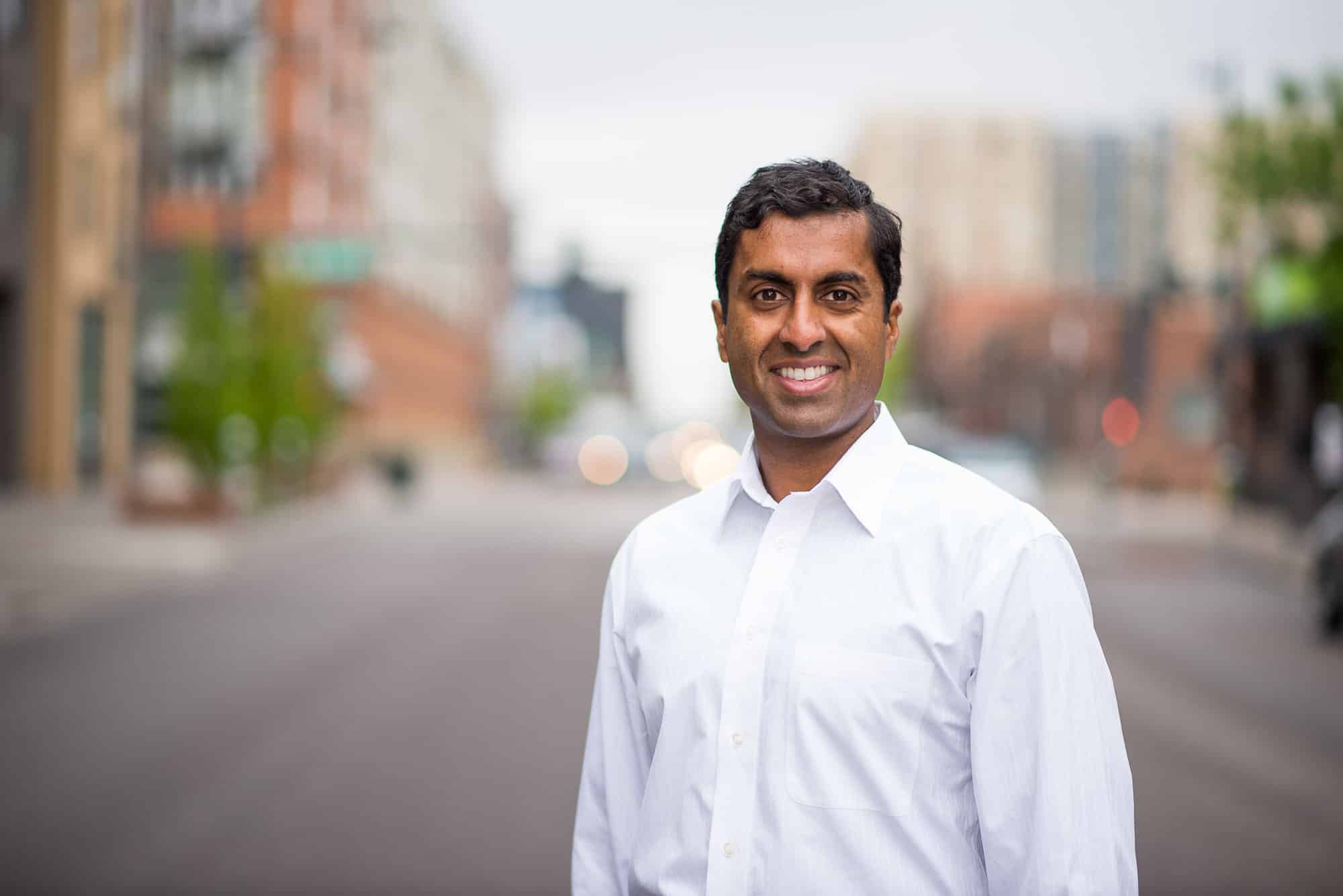
In this episode, your host (Ravi Raman) shares his thoughts about why making a radical career change is so darn tough. Expanding on the ideas in this blog post, Ravi goes into what it’s like to “swim against the current” and make a career change later in life. He also describes three “safe havens” that tend to pull people back towards their old ways and old jobs. When we become aware of these safe havens - it can be easier to resist their pull.
Here’s Why Making A Radical Career Change Is So Darn Tough [Podcast Ep. #14]
View the full transcript
Transcribed from the episode audio by AI, so it may contain mistakes.
Ravi0:18It's Ravi here. Welcome to the Motivated Life podcast. Today's episode is going to be a little different. Instead of bringing you a guest, I'm going to be sharing a topic that I recently wrote about on my blog. And I'll be essentially reading the blog with a few adjustments. And this topic is all about what it's like to go through a career change. And more specifically, why radical career changes are so darned. tough to make. Now, I've had to completely reimagine my career over the past four years, and I am speaking from experience when I say that career changes are not easy.
And in many of my coaching client conversations, this topic comes up, and I thought it would be helpful to share my thoughts. And again, this conversation is in written form on my blog, but I thought me speaking it out loud would be helpful, as some of you have mentioned that you prefer to listen to my content as opposed to just reading it. So without further delay, let's dive in. Here's why making a radical career change is so darn tough. From the time we're barely walking, we're being groomed to land a fruitful career.
School, internships, and part-time jobs are all designed to prepare us for what we will one day call our career. This doesn't pose a problem unless you decide one day that your career is no longer the right one, and then it can feel like you're swimming upstream against the current. There's no built-in social structure to facilitate major changes in career direction. Doing so requires a willingness to go against the grain, to not buy into the concerns of family and friends, and the capacity to work through powerful emotions that seemed to pull you back to the secure job you once knew.
The other day, a coaching client reached out to me with this exact same concern. He hired me to make a transition towards a different kind of life. Now, this client's previous career was that of a corporate ladder climber, and he was wildly successful. However, he was burned out and hungry for a better experience of work, and a more rich experience of life. The goal in our coaching was to craft a job, a new job, based on his skills and interests, a solopreneur lifestyle that yielded income, joy, and a clear sense of contribution.
It was a wholesale lifestyle redesign. Now, all of this was the client's decision, and this decision became clear to him through several long coaching conversations and his own introspective work, after all, he'd had several months away from his job to decompress. And it's at that point that the problem began. A few months into his lifestyle design project, he got cold feet. He worried that he was pursuing the wrong goal. He was worried that what he really wanted was to get back on the corporate fast track.
To him, the solution seemed to be, why can't I just figure out how to run along the corporate fast track while enjoying it and not getting stressed? To which my response was, look, just relax and don't jump to conclusions. See how it feels when you're actively working on your new business and creating a new lifestyle. If you have recurring and deep-rooted insights that you should return to your previous career, by all means listen to those signals. On the other hand, you might, you might, might discover that the impulse to throw out the baby with the bathwater is just that an impulse.
So that was my response to him. And in that terrible metaphor of throwing out the baby in the bathwater, the baby in this case was the client's dream, and the bathwater was all his past expectations and future expectations. Now, the impetus behind my response was a simple realization. that not every impulse actually requires a response, not every desire requires an action. Now, this impulse to run rush back to the safer confines of a familiar life is a very common experience for anyone who is seeking to design their ideal lifestyle and vocation.
Such reimagination is bound to kick up a lot of emotional muck, including a healthy dose of insecurity, along with fear, guilt, and, yes, even boredom. Now, what happens when you get insecure is worth going into for a minute. Just like when I was a kid learning how to swim, I would lunge instinctively towards the life preserver or the lane line, and eventually I learned to ignore this impulse and trust my arms and legs to keep me afloat. Now, when my client got insecure and redesigning one's life, will tend to do that from time to time.
He wanted to retreat the safe confines of the career environment he knew all too well, even though that environment was full of stress and no longer fit his values. It was an impulsive move, but a natural one, In fact. We all want to be safe and safety can be found through any number of places. In fact, there are some common safe havens I want to talk about for a minute, because if we can understand these safe havens and understand the tendency we have to go back towards them, we can realize them and resist the impulse to flee when we're pursuing something we really want to achieve, particularly something like a total career makeover.
Now, those three common safe havens are, number one, financial security, number two, recognition, and number three, familiarity. specifically familiar environments. Now, in this case, my client was feeling a tremendous impulse to run back to his previous career. Because it fulfilled all those three safe havens, he knew that career had financial security, it paid well, he knew he could perform well and get the recognition that he wanted to get, and it was a familiar environment, even though it was uncomfortable, he knew the people and he knew how to navigate it.
Now, let's talk about financial security for a second. Second. Money, of course, matters. However, when you think about the specific amount you require to be happy, it's probably far less than you think. You know, there have been quite a few research studies saying that somewhere between 75,000 and 90,000, really does maximize our life satisfaction. Now, obviously, for larger families, that number will be different, and depending on where you live, that number will be different. But it's not a number of not the millions that many people believe they require in order to be happy.
Now, when you get insecure, you will become money conscious and price sensitive. And if you're looking to transition your career and you start feeling anxious, the salary prospects and certainty of income that come from a familiar job can loom very large. A sure-thing corporate salary will start to feel much better than the uncertain, of a new venture. As a result, you will find yourself being pulled back into the orbit of your past line of work. Now, that's simply fleeing to the safe haven of financial security.
The second safe haven is recognition. And recognition is, in my opinion, just as important as money. I learned this firsthand as a manager in the high-tech industry. While my team members always appreciated bonuses and promotions, I was amazed by the degree to which top performers cared even more about being sincerely recognized and valued for their work. And when we feel insecure, as a job change will often do, we tend to gravitate towards those environments where we feel appreciated and have confidence in our ability to perform.
And this recognition, this sense of worth can be found in the safe confines of a previous line of work. Again, one more safe haven that we tend to flee to when we're looking to redesign our careers. Now, the third safe haven is a familiar environment. Familiar environments are boring, unless, of course, you're feeling nervous. Then they become safe havens. It's in a familiar environment that you know the rules and how to play the game. It's like having a home court environment, a home court advantage, rather.
Just the think about a dinner party you may go to where you don't know many people, then you spot the one person who might be a friend from work. Who are you going to immediately go to and start talking to? Of course, the new person. But where are there conversations waiting to be happen that might open some new doors for you where you might meet new people or learn new things? Obviously, it's not the person you already know. So if you're feeling insecure about a career transaction, transition, you're going to feel this instinct to feel like you should stick to familiar people, places and things.
The problem is this can be a real monkey wrench for anyone trying to redesign their career or lifestyle. So those are three things that tend to really rear their heads, three safe havens that people tend to feel an impulse to flee back to if they're really trying to shake things up in their job. They want to find financial security, they want to have recognition, they want to have familiar environments, and all those things can lead us to flee back to the type of jobs we used to do.
But of course, the whole point of this conversation is that sometimes that old job, that old career is no longer the one that fills your values, no longer the one where you're learning, and no longer the one that's going to lead you into a bigger and better future. So what can we do about all this? Well, look, radically changing your career and lifestyle is very hard. I've done it and am still working through the occasional, though rare, hunger pangs, of a secure income, familiar environment, and the recognition that comes from seeing the rungs I've climbed on a corporate ladder.
It's also tough to figure out what you want, to look at the hazy mist of the future and plot a course into the unknown. It's even more challenging to make it happen. However, there is something we can do about it. And the first step is simply to strive for some internal clarity. Figure out your own answer to the what questions. It's a really crucial starting point. What do you want your life to be like? What career has meaning for you? What impact do you wish to make on the world?
How can you best serve the world? What learning curves are you excited to climb? These are the kinds of questions that will get you anchored in what's possible for you now and where you'd like to take your life in the future, as opposed to impulsively fleeing back to the career you knew. Now, if you don't know the answers to those questions I just dropped, well, don't worry, you're in good company. All you can ever do is take your best guess based on how you feel in the moment.
So find a quiet environment in a calm inner space and just explore your answers to those questions as best you can. It's also helpful to know that the mind is fickle and tends to forget things. So write down your answers so you can reference your thoughts the next time you feel nervous about how things are going for you. Remind yourself of the life you're creating and the career you're creating. Remind yourself why it matters, to you and how you can serve the world as a result.
Passion alone isn't enough. We do need a deeper purpose and a deep meaning to our work and lives. And the good thing is that the insecurity that can rear its head and threaten to derail our career plans, that insecurity, while it's a trigger for wanting to give up on a dream, it's also a very fickle emotion. And like any fickle motion. It flees the very moment you get busy working on something that matters to you. So let's get to work. That's it for today's episode. If you know someone who's going through a career change and could benefit from what I just shared, I'd really appreciate it if you share the podcast with them.
And also, if you have a few moments, go ahead and give me an honest review on iTunes, Google Play, or wherever you're listening to me right now. That's it for today. See you next time.

A note from Ravi Raman
I’m Ravi Raman, tech leader turned executive and personal coach. I send short essays on doing your best work, naturally. Read along.
Join 1,300+ readers of Ravi’s Blog. I respect your privacy. Unsubscribe at any time.
Leave a comment below
0 comments