View the full transcript
Transcribed from the episode audio by AI, so it may contain mistakes.
Ravi0:19Jonathan, thank you for joining you.
Jonathan0:22That's a great pleasure around Ravi. It's a great pleasure to be here.
Ravi0:26So let me guess how many miles you've run this morning already, five.
Jonathan0:31Well, that's a great question to start with. You know what? I haven't run at all today, but my wife has been working out in the lounge, lockdown, work out, and I'm kind of feeling a little bit guilty that I haven't done anything today.
Ravi0:49And both share that. Well, I guess we share a number of passions in common. We're both runners, though I think you're more diligent and regular than I am. In a past life, I used to be a long-distance runner. We also both care deeply about just the human experience. And, you know, you strike me as an expert in human performance. We've known each other a little bit over the past, you know, year, what we first met at a coaching training and have stayed in touch since then.
You distract me as someone who's an expert in how humans as individuals or teams operate. But I'm curious how you would describe yourself and what you do right now.
Jonathan1:30Yeah, I think the word see funny. When I hear the word expert, I think, hmm, am I an expert? I'm never quite sure if I'm an expert. I think we're all sort of finding out more and more about the human experience. And yeah, I'm a psychologist, So my background psychology, so I've worked thinking about the psychology of the human experience for a long time and, yeah, it's, it's a great pleasure to work with because it's an ex. It's never expanding and depthless well of of knowledge that you can dive into.
So there's, there's. I don't think we ever become experts. I think we get better at understanding a little bit more about the human experience, but I don't know. An expert seems to suggest that we've got it nailed and I really don't feel that I've got it nailed. But I think I'm probably, yeah.
Ravi2:23In the show notes, then I'll strike out an expert. I'll put an absolute novice.
Jonathan2:27Yeah, I think that'd be better. A real novice, but very keen, a keen learner.
Ravi2:33A keen learner. Okay. Keen learner, absolute novice in the human sphere of things. I mean, give me a sense of a flavor of what you do now. You have a company capital shift and you do interesting work that that that I think would be interesting for people to hear about so how would you describe what you do day to day who do you work with and what do you help them do
Jonathan2:57yeah sure Ravi I think so I've worked in this field for 20 25 years or so where we've really been I've been really focused on supporting people in business in business situation. So it's either individuals who want to pursue some sort of coaching development, or it'd be working with a team, executive team, or an organisation to help them with their leadership culture or go through a change process. And the angle that I've always taken has been to kind of help people understand the psychology of their experience.
so that they can maximize what they are able to deliver in the function, in the roles that they have, in the jobs that they have. And over the years, the sort of approach or the focus of that has changed for me quite dramatically. It's really shifted. And that shifting of focus, which I'm sure we'll want to talk about together, is partly as a result of my own understanding of what's important changing, but it's also very much to do with the climate that people seem to be sort of functioning in now.
And it's really evident with the whole kind of influx of so much noise, so much social media noise, communication noise, stuff going on for people, which is really detracting from the capacity that people have in business to be able to do what they do well. So, yeah, so my shift has been, my shift of attention has been really interesting over, really over the last six or seven years. It's really moved.
Ravi5:02So you've been in this field for a long time, if you can call it just a field, what you do, where, what inspired. you to get into this, to move in this direction, to get into this line of work, to look into
Jonathan5:16psychology as a profession. Well, the way I got into psychology is, it's a good story, really, but I'm not sure if I should repeat it here, but it was basically a friend, a girlfriend who was staying in my flat at the time, and we were studying. And she was just a girlfriend. And she was using my flat in London, and we were both studying in London. And she went on to do a master's in psychology. And I was kind of just done my degree. I'd done quite well on the degree, which was a little bit of psychology, a little bit of statistics, a little bit of biology.
And I wasn't quite sure what I was doing. And I had a conversation with this girl and said, you know, I'll just do keep in touch when you go off to do your master's because, you know, I'd like to know how you get on, because I'm thinking maybe I'll do that next year in a year's time. And she said, why don't you come this year? And I said, oh, yeah, I haven't really got anything else to do. Maybe I could. So I phoned up the university and got myself an interview and got in.
So I think my choice to go into psychology was mainly because there was a girlfriend who was interested in psychology too and I followed her. But it developed from there. It's not an uncommon story,
Ravi6:41right? First, people's career beginnings. What got you engaged in the world of business from a psychology standpoint in many different directions you could have gone in? You seem to have gone into a management leadership, organizational effectiveness
Jonathan6:57direction. Yeah, I was always interested in understanding business better. And, you know, when you're studying psychology, you have options and there's an option to go into clinical. And I just felt that wasn't really me. It was it was probably you know working with people's in a therapeutic setting every day all day wasn't really my my thing and and there's a whole series of other sort of more minor psychology psychology kind of streams and I just decided the business one was good fun. It was it was an area that I thought I could yeah make a bit of a difference and have a bit of an exciting career about and I think I've really I've really had a very interesting in career met some fantastic people and, you know, met some great organizations.
And the thing that I love, Ravi, about working with business now is that you can access, um, contact with people in a way which is funded by an organization, therefore giving you more space and time to work with those people than you might do if it was privately funded or health funded. So that's been really super helpful and really interesting for me so that the relationship can go on a bit longer in the organization setting. I love that. And you can go deeper into the learning experience than I think even some of the clinical psychologists are able to do because of the restriction on funding and restriction on the capacity for them to work with their clients for a long time.
Ravi8:30You know, we both have that in common in the sense that, you know, I also work with individuals and teams in the world of business. And for me, what fascinates me about working in that sphere is simply that people are spending their prime hours and years working. And so if we can make that more effective, more joyful, less stressed, then it just has tremendous impact on their lives and their families and their communities. So I'm sort of right there with you. There's something fascinating about the world of business and how that operates.
You alluded to, you know, you went into psychology, and I'm reading between the lines here, but you learned a certain way of doing things, and then along the way you've shifted and evolved. And I maybe would love, if you can paint a little bit of that picture, is as you started out doing your work, helping businesses, how are you operating? And then where were there any shifts or realizations that you have that's caused you to shift your approach. You can just share a little bit of the before and the current state of how you operate and what led you to that shift.
That would be great.
Jonathan9:44Yeah, sure, And yeah and just, actually just sort of as a cap the bit we just talked about, Ravi, because the other thing that I'm going to come back to your question in a minute but the other thing that I really have noticed with working with organizations is that when you work with somebody who's in a senior leadership capacity, in an executive capacity, then those people have a very big impact on a lot of people in their organization. So you're almost indirectly affecting more people than you might do if you're just working with one.
So you can really change the culture of an organization by working with the CEO or somebody on the executive team. And that can impact on many, many families, you know, many people and their families. And I love that kind of, that work that we can do, sort of feeding in some way, being nutritious in some way to the community and not just to the individual. So that bit's just wanted to catch that bit because that's been become more and more important to me, actually, as I've gone through my career.
And actually that kind of leads really well into answering your question because when I started working in psychology, I was actually very focused on psychometrics, the measurement of psychology through the science of psychometrics and wrote a couple of batteries of psychometric tests, one of which is still published. in the field of careers and development. And so I was kind of interested in the science a bit. And I was interested in the way that you could scientifically prove the relationship between what we were doing and the outcome.
And a lot of my colleagues went into the field of selection, assessment and selection in the recruitment setting. And they do great work in that space. but I just found it personally not as satisfying as I'd like. So I went then into the field of development and ended up really training. So training people in management development and leadership development. And then did that for quite a few years. And I've sort of reflected on it quite a bit. And I look back and I still get very nice correspondence from some of those people who went on those programs, you know, 10 years ago, 15 years ago.
I got a very nice photograph of a guy who was up on the top of a hill that in the south of Wales in the UK and he took a selfie of himself with this hill in the backdrop and reminding us of the fact that we'd gone for a walk up there as a leadership group and how he'd still remembered the learning. And it was really nice and this was probably 12 years ago that we ran that program probably more actually So it was really nice.
So we were getting some great results. But here's the point, I think. I just felt like we were kind of dealing with the surface of some of the issues. We were kind of looking at some of the personal issues that people face in their leadership function. And we were kind of nodding at them, right? We were sort of addressing them. We were sort of addressing them through things like emotional intelligence. We were sort of addressing them through things like NLP, neurolinguistic programming. We were sort of addressing them through looking at some psychometrics that looked at, I don't know, style or approach or personality.
Right And it was kind of helpful. But I kept dishing this stuff out thinking people really like it. But love that? Yeah, they love it. They love it because it gives you something to do. You know it gives you something that you then have to follow or it gives you a reason for why. You know you want to point at somebody a bit more firmly than somebody else or whatever, but I just, through the years of doing it, got to the point where I realized that it wasn't really getting to the point.
It was, it was, it remained a little bit superficial and it wasn't superficial. It was quite a deep program for many people who've been through that. But for me, it became not enough. It became something which I didn't see sustain in the way that I wanted it to sustain. So I started that
Ravi14:47was there, I'm curious like was this just. seeping in, after doing it for a while, did you just, did something tug at your heart and say, we're not getting deep? Was there a moment where you realize there was a different way of doing things? What was it like for you to, because you trained in this stuff?
Jonathan15:07Yeah, I really did training this stuff, Ravi. And here's the thing, right, when I was running the programs, I just had a feeling. I just felt. I don't know how to describe it. It felt slightly fraudulent, which I'm, it wasn't because there was lots of fantastic learning for people. And it was very genuine and authentic on my part and their part. But for me, in my heart, I just felt slightly like I was shortchanging people. That's what it was more like. I was just short changing them.
And I was probably shortchanging myself. There was something more to learn about the human condition that we didn't talk about, And the reason why we didn't talk about it I realize now is because I didn't have the words to know how to talk about it. I had the feel and I had the sense of it, but I didn't have the right words to use. Yeah, and that got me looking, that got me looking for, for it got me retraining actually. So about six years ago yeah, about six years ago I decided that I look around to retrain and I had no idea what I was going to retrain in, but I knew it was something.
You know, I've done the training 20 years before or something, and you got to keep. You got to keep learning and always, otherwise it gets very old and you get old in yourself. You know you get, you can't get old and it gets kind of samey for you. You've got to keep moving.
Ravi16:52right so what was the what are you how did you describe what you do now and how does it contrast with the nLP psychometric um more how you were originally trained to do
Jonathan17:08Well, the shortcut answer to that is it kind of explain the. The learning that I've been through, which I'm still on the learning kind of, and will be, I know, forever now is one where I understand the mechanics of how the mind works, which explains why NLP can be really effective, or explains something about emotional intelligence or explains something about personality. So it's one layer underneath some of that stuff, or even a few layers underneath some of that stuff I was teaching And for me, that teaching that is so helpful for people who I'm working with, because that we then share that understanding of how the mind works and they can then use that knowledge to decide what they do and don't want to do, which is so profoundly different, and I'm very happy to talk more about that really.
But it's such a respectful learning process for people because it isn't telling anybody what to do or not to do. It isn't describing a set way or you know so many books around this field are giving you and even if you look through LinkedIn, you know there's so much instruction on what you should do to be better or to live a better life forward, to be happier or be more productive or be more effective. And in the end, I just don't think that's the way that humanity kind of ultimately learns to be told what to do to be better.
And I also don't think it's true anymore that we need to do anything to be better. The learning experience of being through has allowed me to see that my job is to uncover people's capacity to be the best they can and the best that they are as opposed to learning a skill set to become different or to become better.
Ravi19:25I like the word you use respect. I was reading a book about trust Many years ago. I was still in my corporate days at Microsoft. I was reading a book, sort of in the emotional intelligence field, and it was about trust and had a whole bunch of recipes on how to create trust and something about that felt a bit almost like drinking a diet Coke, like it was good but I could tell it wasn't real, because how could a book teach me how to trust and he doesn't that have to come from within.
So this idea of respecting our own capacity to have some insight, wisdom and to figure things out, I just really like that, the way you phrased it with that word, and it's definitely something we see in common in people. People have the capacity to figure things out and navigate things, and reconnecting to that will go further than learning a 17-step process for building trust or managing up or what have you.
Jonathan20:29Yeah, because of course, of course, trust is an outcome. You know, trust is an outcome of an authentic relationship, let's say. Trust is an outcome of being able to communicate with somebody in the way which kind of connects you know, connects you in terms of your humanity. You can't do trust. It's not something that you can, to learn to do. And the other thing about the teaching, for me, the teaching which suggests that there is a list of things to do and the respect point is I don't think people listen in the end.
They might take it on and go, oh, yeah, they might read the book and say, oh, yeah, that's great, great, great, great. Yeah, that makes lots of sense. but because they've been told, yeah, that it's something that we need to do and follow, they'll maybe do it. It's a bit like a New Year's resolution, you know, might do it for a few days or a few weeks, but you quickly, you know, you quickly revert back to your old ways of doing things because you haven't had an insightful change, an insightful knowing about it.
It hasn't sort of affected you at a deep level because it's something you've been told and the respect of the learning experience now allows people, you know, what I really love to do now is allow people the time and space to be able to insightfully see themselves in a very different way. And of course, once they've seen themselves in a different way, you know, that's it. That change has happened. It's there forever. It's there for good. And that's a deep learning experience, which I think is just such a gift to be able to share with people.
And of course, when I'm sharing it with other people, I'm getting it myself. So it's a gift, and it's also feeding me at the same time. So it's wonderful.
Ravi22:21Making this shift, I mean, how has that been, just for you personally and running your business, it seems like a pretty big shift to go from training to what you're doing now, which is helping people uncover more naturally with their capacities. what has that shift been like for you and your business and maybe what have you learned along the way and going from doing what you were doing before to what you do now? Well,
Jonathan22:49the content of what we do is different. The outcome is the same. So you're working with an organization or with an individual who wants the same outcome. So businesses will always want productivity increase. They'll want better decision making. They'll want, you know, more engagement in their, in their workforce. They want a stress, a well-being and stress light population of people in their business. All those things, they'll want a strategy to be developed. They want an operational plan to be delivered. So those remain the same. So the outputs are very much the same as they were.
The thing that's really shifted has been the content of the learning experience for the individual team or the organization. So if you're like, in terms of my business, the conversations I'm having with clients is very similar. It's like, oh, that's what you want. Fine. Well, that's what we're going to. So my first step is to really understand what the organization wants. And to do that, you know, I'm listening very intently to the logic that they're talking about. what did they see is they want as outcome and what do they think has been the thing that stopped them from producing that outcome?
Then things start to change a little bit because of course then I'm applying that logic to my own understanding of how the mind works and for many people put simply I think I use the lovey equation performance sequels potential minus interference, which lots of people have seen, right?
Ravi24:39Well, with my audience, and I want you to finish your thought, but with my audience, probably new to them. So we can talk a little bit about what that.
Jonathan24:46Yeah. Okay. I can't remember the guy who came up with it first. Tim Galway, I believe. Oh, yeah, that's right. Yeah, that makes sense to me now. Yeah, that rings a bell. So performance equals potential minus interference, which is the equation. And I love it, because, you know, what organizations always are looking for, and what we, I guess, are looking for in many ways is an increasing performance. And that comes about by the potential that the individual might have. So that's our skills, capability, attitude, emotional well-being, whatever sits within our individual potential.
And from an organization's point of view, it might be their IP, it might be their processes, it might be the systems. You know that they hold on to minus interference, right. So that potential all sits there really beautifully. And then there's this thing called interference. Well, interference comes in the form of kind of tangible interference, which might be I don't know, really chunky kind of bureaucratic systems or terrible IT or you know, or the environment that people are working with in within is not great and you need to manage those things and they just get managed.
But that's not the bit I'm interested in. The bit I'm interested in is the mental interference stops, the noise, that mental noise which stops people from delivering their very best. Now what traditionally leadership development has done is to increase the potential. So it's gone out there to increase skills, get people to be better at, to learn more technique, to apply that technique, and then go out into the world and do that stuff. But of course, what that often does is, for many people, it increases the noise that they then have about that thing, because it's now another thing that they've got to do.
In a number of people who I've met, who've, you know, And this is no criticism of anything about meditation or mindfulness, both of which are beautiful. But, you know, the number of people who've got stressed out by the fact that they can't find the time to do their mindfulness, right? So it's kind of fun that you've got this great technique, but you're stressed out because the noise has gone up as well. And there's a sort of crazy paradox in that. So what we found is by just focusing on increasing skills and knowledge and capability, the net performance doesn't always go up at all.
Yeah. Sometimes it goes up a bit, but sometimes you can go down because the noise, okay, so I've got to now do the six-step plan on delegating. I've now got to do the grid on prioritization, whatever it would be. Just a quick
Ravi27:48second. There was nothing against Six Sigma and Blackbelts and all that stuff. I believe there's a lot of good science there. But in my corporate world, we had a lot of people trying to deploy a whole lot of knowledge, structure, process, technique to a very organic engineering process, okay, that we were using in the company. And I just saw what happened and just the amount of interference it created. And even when we ship product, it wasn't necessarily better. And even if it had fewer bugs or errors, it all.
often didn't have the things the customers wanted. And so when we actually stopped trying to deploy all this new technique, teams actually did a lot better. And so that's just why I say sometimes the knowledge actually gets in the way. It's like when I was a kid, I remember going to a swim clinic for a week. And I learned a new stroke technique. And I was a competitive swimmer. And I remember how for a good month afterwards, I was way worse. I was so in my head.
it just interrupted my childlike flow. Eventually, I just let all that stuff go and I went back to my normal swimming and it was fine, but I can relate to what you're pointing to here. And sometimes knowledge isn't helpful. Sometimes it is.
Jonathan29:09Yeah. Yeah, that's definitely right, Ravi. And sometimes, you know, you do need knowledge. Of course, you need, you know, it would be crazy to say that we don't need to develop knowledge. Of course we need to develop knowledge. And we're doing that all of the time. But if we're just focusing on that, right? If we're only focusing on that, then we are losing the benefit of the other part of the equation, right? And the other part of the equation is interference. So this whole focus on mental noise.
And the other thing about mental noise is that it's increased a crazy rate over the last few years and over the last 12 months, well, nine months, you know, in an amazing rate. So what we focus on is, yes, we do some work helping people upskill. But the main approach that we will be working with our clients with is reducing interference. Because if you reduce interference, if you remember the equation, performance equals potential minus interference, you know, just by simple logic, you reduce the interference, you get higher performance outputs, right?
I mean, that's a taken, it's a given. And the focus on, the focus on performance I love also because performance is two things for me now. One is an increase in, let's say, productivity. That's an increase in performance. But I would also describe an increasing performance as the same productivity done without the damage that gets done to people. So, you know, just as useful as an increase in productivity, which tends to happen anyway by a reduction in interference, is that people at worst end up as a result of the programs at worst doing what they always did, but without the stress, the hassle, the burnout.
that they were going to get if they didn't reduce the interference. I'm
Ravi31:23curious, what do you see as the reaction to your clients to an experience of less stress? And I just say this because primarily my clients are in the world of tech. And almost to a T, they are experts at harnessing willpower to deploy in pursuit of whatever they're trying to do. and they've become quite accustomed to stress. In fact, I even experienced in some cases in my career where a certain level of stress was seen, there was like healthy stress. People would talk about, oh, there's like a healthy tension and a healthy stress.
And I'm just curious what you see as you work with leaders when they experience that less stress. Are they realizing the potential of that? Or are they freaking out like, huh, that I'm not going to perform as well? I'm used to feeling this tension because I often initially working with a client or teams, they're like, this feels too easy. Yeah. It can't be right. I'm just curious what you see from your vantage point. Yeah,
Jonathan32:32that's great. And it's really, it's really what I experience as well because people, we've all got very used to the feeling of stress. It's become, you know, it's an habituated response now, you know. And actually like any, like any habit, if you break it, it, it feels old. even if it's a, even if it's for the better, it feels uncomfortable. So, you know, when I'm, that does happen. People feel anxious that they're not doing as much because they're not feeling as stressed. So what, what do we do?
Well, we sit down and we say, well, okay, tell me, have you done? And I just ask a very simple question you know, as a result of all this program, have you been able to deliver more about the same or less than you were before? And want me to be really honest and go back and look in your diary and really kind of measure this for yourselves. And absolutely everybody has said either most people say oh, they've said, oh, actually I've delivered more. It's a bit of a surprise.
And some people have said they deliver it about the same, right? But the majority of people who are actually delivering and being more productive. And then it's like, well, there you go. You don't need to worry any more about not delivering because you are. And there's a sort of, there's another moment where you literally have people going, oh, right. And there's a shift in our understanding of how it feels to be at work. The thing that we then, I found myself having to then have conversations with people about, is to not get back into the habit of just simply building.
back up the amount you're doing because you're able to see more insightfully about how stress kind of happens and then get yourself into the place where you used to be in that old habit of feeling anxious all of the time. But, you know, we've just got to stay wise about that for ourselves.
Ravi34:27So maybe we can sort of dive in a little bit through the lens of a middle manager. You know, imagine you're working with a middle manager who's running an engineering team. It's a highly technical person managing managers trying to get software out error free on time. That's going to win, that's their, their way. And then they realize, hey, you know, I'm efforting my way through, this isn't sustainable. Um, I'm not getting the breakthroughs I need. So let
Jonathan35:04me let me engage
Ravi35:05with Jonathan and your team and figure out how to move forward. I mean, how do you work with someone like that? I mean, what advice do you give and how do you help them tap into the very thing you're talking about, this natural performance and then deal with the minus side of the equation you spelled out, which is the interference side?
Jonathan35:29What does that look like? Well, yeah, it's a good question and it's kind of got a long answer. I expect it probably takes two or three days to answer that question. But yeah, I mean, I think here's my, my intuitive response to that question. When, when I sit down with somebody and it really it really doesn't matter if they're in a middle management position or an executive position or they're heading up business right, And you have a conversation and they tell you a little bit about what the issues are, some of the things that are stopping them from performing at their best, or some of the things they want from an interaction with you.
I tend to end up asking them do they know life could be easier? Do they know that it doesn't have to be this hard? Yeah, do they know that they've got the answers if they can just quiet and down in themselves and give themselves space and time to find those answers? Do they know that they're okay? And and 99? You know what I'm going to say 99 times out of 100, but I have not yet spoken to anybody yet who doesn't know. The answers to those questions are yes.
So they get a sense. They get a sense of knowing that life they're making it difficult for themselves or there's something that's happening in their understanding about their experience which is ending up with them feeling life's a little bit more difficult work life, personal life, whatever it might be than it needs to be. And then they get interested, and they get interested in the conversation, and then I might even, you know, mention to them the performance equation that we just talked about and that makes sense to people in a very, very simple way.
It's like, yeah, I'd love to get rid of that interference. I'd love to get rid of that noise. Because without that noise, I could be amazing, you know, I'd be able to do all the things that I dream about. You know, I'd be able to find the space and time to balance my work in my personal life and deliver all the things that I know I could deliver. And they get interested. And they get quiet in themselves often. And then I just explained that that's the conversation that we're going to have.
And it takes a little while to unpack the understanding that sits behind knowing those things in a useful way in business which you know I hesitate to sort of get into here because it takes a little while to sort of go through that process of understanding. Because people need to see the way that their mind is working right, the way that their psychology is happening to them in a way which is probably very different to how they're seeing it now. So it's a little bit like the process of exposing the truth of the day-to-day way these we're all having experience and then kind of rewiring that for ourselves.
Yeah, there's a little bit of rewiring. There's some new neural connections get made in those conversations which open our eyes to a way of living which is way more peaceful, way more productive, way more creative and much more satisfying. And the point of saying that last bit is the guys you speak to already know that. They already know that that's accessible. They know that's available, but just haven't had the mechanism to have that conversation. So we end up having that conversation together.
Ravi39:32Right, right. And it seems that the opposite, in our, in our modern world, the opposite is being reinforced from the outside. I mean, businesses have objectives and quarterly goals and trainings. You know, you go look at the best-selling books in the personal development field and you, every year you've got a new habit building book or a new process for success or seven rules for this or that. And so what, I'm just curious because we both have, you know, in similar spirit, point people back to a different place.
Why do you think in the world, um, This is catching on, but it seems to be in the minority, where people still are looking for the external answer. And that mentality is being reinforced, even in the world of coaching. Most coaches are really fixated on goals and then strategies to help people achieve, like new knowledge and frameworks versus pointing people to the wisdom within. Why do we seem to be in the minority here? to me it seems that that
Jonathan40:44Way. Yeah, it's a it's a good point. I think it's the minority now. I think it's the minority now and I think it's a couple of reasons for me, rabbi. One one is that it's it's a slow burn, in that any new way of doing anything takes some time. So you know, way that we've been living in this kind of pursuit of material gain and the way that we've kind of fixated on habits to get to that end point has been around for very long time.
You know really. And it takes time to shift that mentality. And that sort of that's happening with the learning process that's going on for people at the moment. And I think that as the world gets kind of more and more externally driven, even to the point of our young people of our society's well-being, for many, sits with the most kind of externally driven of all things, which is a social media. kind of platform telling us whether or not, or people telling us whether or not they support our cause or not with a little tip, you know, or like or whatever it might be, right?
So you know, that sort of excessive outside-in kind of mentality is becoming so pervasive and so visibly destructive to people's well-being that I think we're in a great place where society starts to say hang on a minute, is that right? Is that the right way to look at it? So there may be some pushback coming as a result of that. The other thing is that I think we're quite lazy humans and I put myself in the category of being human And when we're told what to do, yeah, we kind of like it.
It's a really interesting conversation about leadership, because people love to be led. You know, broadly speaking, they love to be told what to do and then to think they're going to get on and do it, because it actually stops us having to make some decisions for ourselves. So I think it's a sort of laziness that that's really innocent. And I put myself in that same camp absolutely of getting caught in the simpler way of doing things, which is like oh, I've got the three things I've got to do this morning and I'll go and do those, and then I can do what the hell I like after that, right.
Whereas what we're having a conversation about is something which is reshaping our understanding of the whole of our experience and that takes a little bit more looking at, to be honest. It takes a little bit more work. But the payoff is great when we get there.
Ravi44:05So, Jonathan, just in the last few minutes, I'm curious for you,
Jonathan44:08what learning curves you are on,
Ravi44:11just you personally regarding your work you do and maybe of anything else that you're into now. Yeah.
Jonathan44:20Well, my learning curve keeps going. Yeah, I just keep learning and learning. I don't know specifically Specifically. I mean the learning curve that I'm really really enjoying at the moment is actually becoming more and more grounded. Okay with settled with knowing that the work that we do is having a really helpful effect on people and organizations, and continually learning how to interact with organizations in a way that they are able to both listen and hear that and also learn about that. There's a great it's a never-ending learning experience.
I think that we're all on as consultants in business and we're all on that in that learning curve as people. That's brilliant. On a more sort of super fit or more light note, I'm learning about podcasts and I'm learning about social media and I'm learning about working in that field, which is good fun as well, but quite challenging because it's a very different space. That's quite an exciting space for me as well. Yeah.
Ravi45:53Wonderful. If people would like to connect to you and what your company does, where should they go?
Jonathan45:59Oh, yeah, my website is capital capital hyphen shift dot com. So www. capital hyphen shift dot com. And you work
Ravi46:13with individuals, teams, organizations on leadership and just leveling up performance in an interesting and
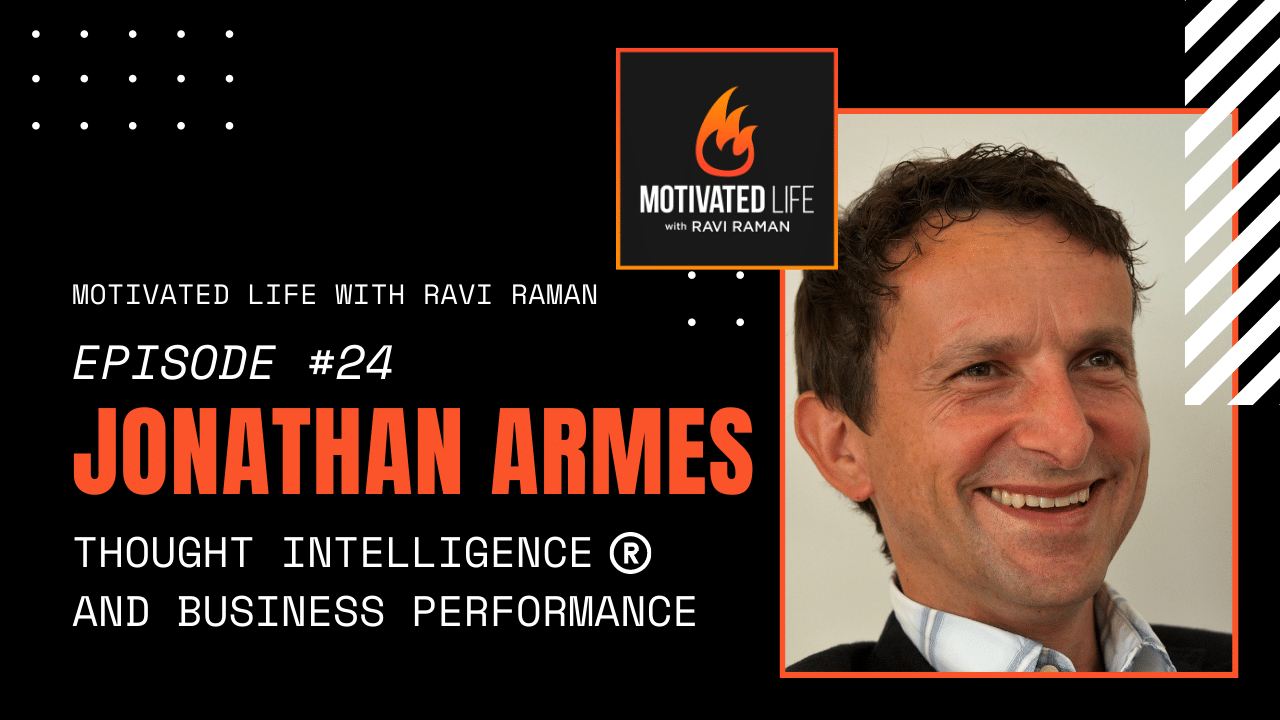
Jonathan46:21unique way. You bet. And, you know, we brand all the work we do under the icon brand thought intelligence which is a way of understanding how the mind works and the benefits that that brings to people and organizations. Wonderful.
Ravi46:40Well, Jonathan, have a good day and have a good time on your run. Should you very much?
Jonathan46:46Thanks, Ravi. It's great to speak to you.



Leave a comment below
0 comments