View the full transcript
Transcribed from the episode audio by AI, so it may contain mistakes.
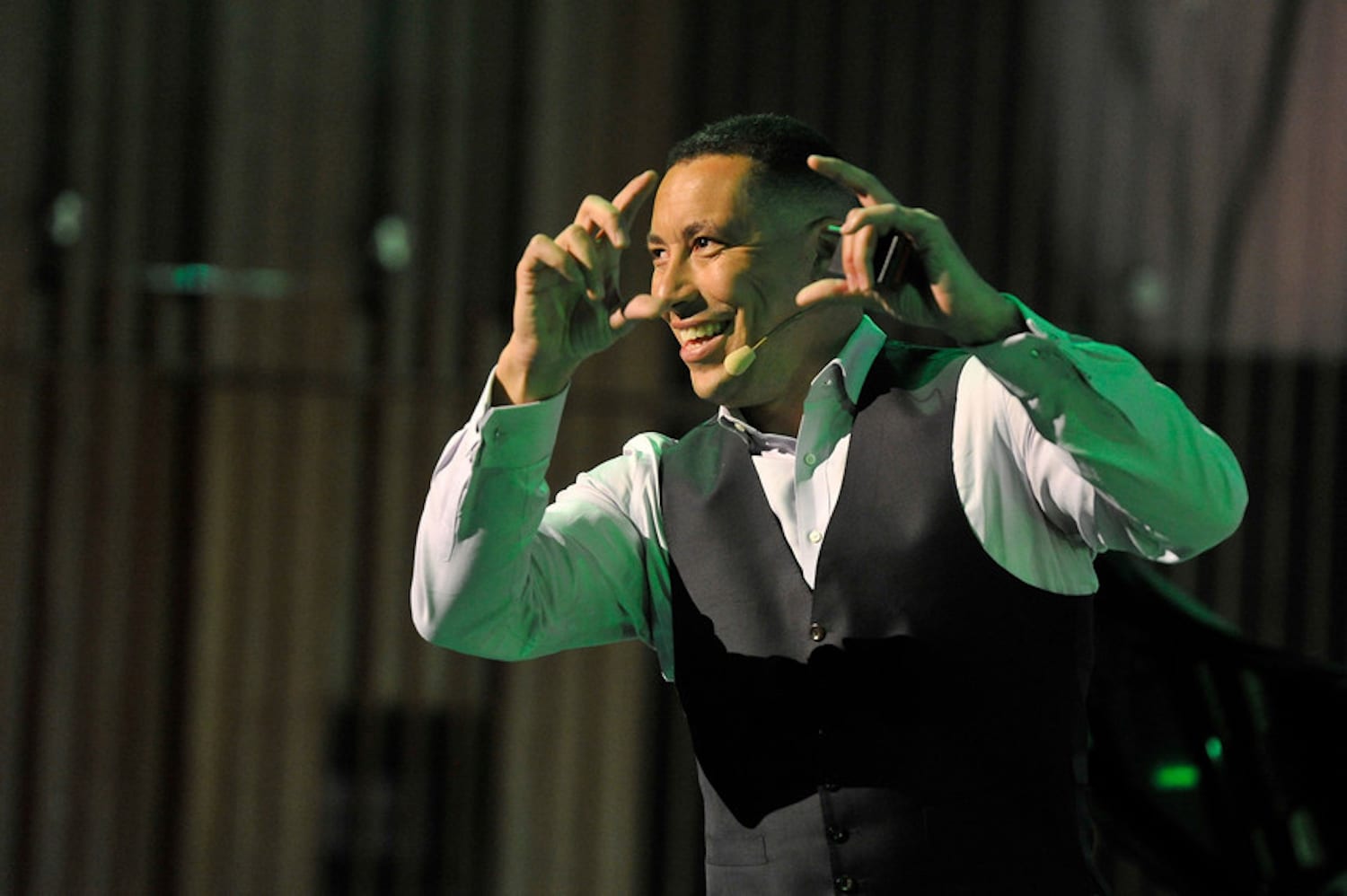
Ravi0:19Welcome to the Motivated Life podcast. I'm Ravi Raman. I'm really excited to bring you Frans Johansson as my guest on today's podcast. Frans is the author of two amazing books. One is called the Medici Effect. The other is called The Click Moment. And the Click Moment is among my all-time top favorite business books. Now, the Medici Effect, Frans's first book, was very popular. It sort of went viral about a decade ago, and it's been translated into over 20 languages. But the click moment is the one that really caught my attention.
Now, the book is all about seizing opportunity in an unpredictable world. And what fascinates me about this book is that it's sort of the antithesis of what you would expect a business book to be about. You see, most business books tend to have how-to guides. and strategies and step-by-set processes in a way reverse engineering success and then sharing that blueprint with you so as if following that blueprint will guarantee success for you. But of course we all know that's not how life works. How many times have you read a book, tried the steps, and they just didn't work for you?
And it's one of the rare business books that actually embraces the fact that much of the world is full of unpredictability, full of serendipitous events, and frankly, full of luck as well. And it embraces this idea of seizing opportunity in an unpredictable world. And the book has some stories that will really blow your mind, some stories about how Starbucks was first really not founded, but got on a steep growth curve. and it's not what you'd expect. Some stories about the early days of Microsoft and many other stories that make you think twice if you assume that these large successful companies actually had a well-thought-through plan in their earliest days.
And the messages in this book and in this podcast apply equally well to anyone, thinking through lifestyle redesign, thinking through a career redesign, thinking through just navigating, say, their job and their career path with more skill. The principles we talk about really do apply in all aspects of life. And I'm just really grateful that Frans was able to take the time to have a chat with me about this great book. I've given it to so many of my clients as well. So definitely recommend picking it up.
But even if you don't, this podcast is going to give you some really good insights on what you can practically do starting today to help your business or yourself thrive in an unpredictable world. So I don't want to drag out this intro any longer, but I'll just say this. If you enjoy the podcast, it would mean a lot to me. If you would give it a quick rating on iTunes or Google Play Store. And if you know someone who might enjoy listening to these episodes, please go ahead and just pass the word along.
Really appreciate it. And with that, I bring you Frans Johansson. Friends, thanks for joining me.
Frans3:57Thank you for having me. I'm looking forward to this.
Ravi3:59Well, I've been looking forward to speaking with you for a long time. Big fan of your books, both of them, the Medici effect and the click moment. But I really want to dwell a bit on the click moment in our conversation. And I'm curious, what inspired you to write The Click Moment?
Frans4:17You know. So I've written The MetaToo Effect. It's been out for a number of years And I started to notice something interesting When I went out and I spoke about the MetaTie Effect to various companies and leaders. One of the message points that really resonated, and let me just say that the central thesis of that book is that we have the best chance of creating groundbreaking ideas at the intersection of industries and disciplines and cultures and so on. Essentially, the diversity drives innovation And when I started this I thought I really thought that the core audience of this were going to be in the sciences.
You see a lot of discussion on interdisciplinary science, for instance. And that was not true at all. It turned out that the one group that was really interested in this message were chief diversity officers. And they were trying to explain to their CEO, so to other executives, just why diversity and inclusion mattered in their company. And what I essentially provided was the way of saying, look, it matters because it drives innovation. All right. So fast forward a few years, what I end up happening was that would give these talks.
They would, the executive team of a company would hear it. They'd be excited about it. They would ultimately invite me in. I was able to start creating a company around it called the Medicine Group. We consult with these global companies all over the world. And at one dinner one night, one of the strategy execs said, hey, look, France, I have to hand it to you. I'm very impressed by your side door strategy. And I said, actually, I don't, well, what do you mean? I wasn't sure what he meant by that.
I mean, you're able to get into these companies and to discuss strategy and innovation and so on. But basically, through diversity, it's a door that no one of the other strategy firms or innovation firms really knock on. And it's like a side door in to the, into the sort of the CEO suite. And so I sort of laughing at that. And I realized, well, you know, that must have seemed really planned for him. What I knew was better, of course. I knew that the reason we had actually even, I had noticed this pathway, was because of a conversation I had with my wife.
She was working at JP Morgan Chase, and she was doing diversity work, and they'd asked her for the business case for diversity. And she said, you know, look, I think your book might be it. And when we explored it, we realized that was true. And so what in my mind was a strenipitous conversation with my wife was in this strategic sex mind a well-laid-out plan that I executed to perfection. And this dichotomy made me think, well, wait a minute, what if this is the case all over the place?
Like what if when we look at success, we are really adamant by creating a story that explains that success, but only after the fact? What if you're actually living through it? It looks very different. It is more serendipitous. It is more unexpected. And so the click moment was really the effort for me to go much deeper into that realm. Just how much of success is truly serendipitous, is truly unexpected, and how much of it is actually planned and analyzed. And the conclusion, of course, was that far more of it is in the first category than we either would believe, or we'd even like to believe because it makes us uncomfortable.
Right.
Ravi8:02So how would you define a click moment and why are they so important?
Frans8:09So I talk about a number of different types of randomness and serendipity in the book, but I hone in on click moment because some of the most evocative things that happen in our lives. I mean, I define it as a moment where we have either an unexpected insights, and unexpected conversation and unexpected relationship that ended up having real meaning. It ended up setting us into a different path than the one we're on. And they matter greatly because the way we usually operate is that we're looking for the rational, we're looking for the logical.
And what that leads us to, it leads us on a path where lots of other people are. are. So if you're saying to yourself, well, I want to, maybe it's you in your career and you're looking to figure out what is the best way of becoming this type of executive, for instance. So what's the best way of getting a position in this company? And then it's going to be a sort of a, a, well agreed upon pathway, sort of the rational path we have to do this.
Well, that path is going to be littered with people trying the same thing. And you essentially walking into what's essentially is going to be very difficult. And what I contend in this book is that these click moments, these moments with unexpected inspected connections matter because it means that he can set us upon a path that is not planned or analyze or is not rational. And that path is likely to be free from competitors, free from sort of the well-torned path that others start wandering on. And that's the way you can set yourself apart and truly make a difference.
Ravi9:51Do you have a sense of what it is that drives humans to explain away serendipity, luck, coincidences, and just rationalize them? Because it seems like almost every day there's all kinds of serendipitous things happening in my own life. And yet in my mind, part of me thinks, oh yeah, I made that happen, meaning I planned for it. It's all part of a grand scheme that I'm operating. what is it that drives us to explain away these unpredictable experiences?
Frans10:24I mean, we are wired, hardwired to recognize patterns, to see patterns. Even when there isn't really a pattern, we'd rather, we'd rather sort of find the pattern. This is why, for instance, conspiracy theories can be so powerful. You have a couple of dots, and then people will connect those dots, and all of a sudden you have something that seems to make sense. because we want the pattern to sort of play out. We're hard right for it. So we are actually actively looking for explanations that make sense, long explanations, things that sort of can fit within a larger narrative.
It makes us feel comfortable. It makes us feel like we know what we're doing. And it goes more than just wanting to get these patterns. Ideally, we want somebody else to tell us this is what you need to do to be successful and lay out a step-by-step sort of path for that because that would be very helpful. And what happens instead is that we ignore all these other, you can call it weak signals if you want to. I think of quick moments. You ignore the unexpected moments, the same difficult moments that actually have far more meaning to you.
And let me just share a story that the first rush I was with me as a person. but this also is true for organizations. And just last week, I was at, two weeks ago, I had a conversation at Pfizer. And this is a story I think I shared in the book as well. You know, at one point in the 80s, when they were just a mid-site sort of pharma company, they were working on this drug that was a heart drug, and it wasn't very good. And yet many of the tests subjects kept on asking for more of the samples of this drug.
And they couldn't understand why, because it wasn't very good. But when they investigated, it turned out that it had a really unexpected side effect. And basically, particularly with the guys, it allowed these men to, let's just say, rise to the occasion when they were looking to have sexual intercourse. And they could have said, whoa, that's unexpected. But we're actually very focused on the heart drug. And the heart drug is what matters. Let's get back to it really matters. And they did it. Instead, they sort of capture this unexpected moment of insight and went with it.
Of course, that became Viagra, one of the best selling drugs of all time. Well, what I say is that we like to exclude the outliers. And we look for the clusters of data points to sort of help us make sense of reality. But in fact, it is the outliers that provide probably the most interesting and insightful data.
Ravi13:10Interesting, interesting. Now, I want to go deeper into these click moments. But first, I'm really curious. So the book has been out, I think, four or five years now, is it? Six years now. Six years now. I'm curious. How much pushback did you get from sort of the business publishing establishment on this book? Because almost every other business book I read, Strategy Book, seems to provide a templatized how-to guide for success in a predictable world, so to speak, or at least they ignore the random factor.
And so I'm curious, did you run up against a pushback as the book got out there? Yeah,
Frans13:52that's a great question. I would say that one of the things, the short answer is only occasionally. And I think that the reason for that was because I had, I realized that In order to sort of tell this idea, I had to have a compelling explanation for why the world looks the way it does. And so when you read this book, actually, I open with describing where randomness is not in effect. And these are situations we can recognize. And I'll talk about, I use Serena Williams as sort of the central actor in this story.
But what I'm saying is that if you look at Serena Williams as an example, you can explain her success very, very logically, and it's a function of deep expertise, and it makes a lot of sense. And this has been done many, many times before. They talk about the 10,000-hour rule, for instance, if you want to become the best in the world of something, you should work very, very hard at practicing in that thing. And that holds true for Suina Williams, it was true for LeBron, it holds true for a whole bunch of various players out there.
And what has happened is that people have taken this rule and simply applied it to all walks of life, all kinds of endeavors. But that plainly makes no sense because it doesn't hold true. For instance, so Reed Hastings starts Netflix. How many hours of practice do you have running a in video rentals? I mean, none, basically. He rented some movies. He didn't like the experience. He starts Netflix. And that works really well. Richard Branson starts Virgin Airlines. You know, after he started Virgin Music, right? really logical move.
And I like to ask people, do you know who started an airline with? And like, no, and he started with a lawyer. And Richard Branson had no experience in airlines. Didn't prevent it for me successful. So clearly there's a difference here between how Serena's works operates and how Richard Branson's and with Hastings works operate. And the difference is that in Serena's worlds, the rules have been locked. Like tennis, the rules of tennis don't really change much. But the rules in the world of business and in the social world can change all the time.
And when the rules can change, then your ability to predict what's going to work or not work drops, hence the rise of randomness. And we live in a world where this has never been more true than today. And what I was able to do, to answer your question, I was able to do, share this narrative with publishers. And they really bought into it and realized that this, that makes sense. I can actually see that play out today, right now, in my life. And that's, and that's me was interesting.
I will say that the pushback I think came from executives that had themselves at stake in being able to explain, either to explain their success in a way that made them seem very, very smart or sort of defend their strategy that outlined And here's the thing, The executives that I never had any pushback with, the CEOs, so the very senior executives, because they knew every one of them be like oh my god, if you look at my career, boom here, click one, with here, unexpecting us, here, the strategy that we've carved for the entire company and the future of this company.
What, what made us embark upon it? It started out of something completely different. In this in the book I share stories around Starbucks. Or or IBM, with the Watson Starbucks, with moving from selling coffee bean sessions selling coffee by the cup, Microsoft. And so all these stories converged and CEOs knew it. And for this book was huge.
Ravi17:37It does seem like the kind of thing where you can read the concept and that's one thing, but it's seeing it in action and life in business that makes it real. That's what I'm hearing you say. The CEOs, they see it because they see it happen. And when I read the book, I was just, I read it while I listened to the audiobook the first time I was in my car, and I thought, oh, this is a good book. But then it rolled around in my mind over the weekend, and it started to click because I noticed how it's really true in my own life decisions I've made.
And it really synced in.
Frans18:14Yeah. And I think that the pushback comes from that. Now, I will say, I got pushback from other authors. You know, when I was not trying to, you know, get quotes or blurbs for this, for instance, for the book when it came out. Not all of them wanted to do so. They felt probably, I won't go to name any names here, but there was some threatening things around it. So it was much harder to sort of get that than I expected, because many of them were, you know, stating a much more planned approach.
Well,
Ravi18:47I think it's a book whose time has come. And I want to sort of go on one thing you mentioned. You mentioned the Serena Williams example and the difference between fixed rules versus life and the 10,000 hour thing because it's very much in vogue to wear hard work as a badge of courage. And as an executive coach myself, I see that many, many of my clients and their teams are just, they're working super hard and burning out. And I, so the flip side, in other words, the flip side of luck does seem to be hard work, but, but what I hear you say is, hard work might work if you're playing tennis and mastering the game, but not in business.
So can you talk a little bit more about the limits of hard work when it comes to business success and even career success?
Frans19:38Absolutely. And it's such a great, it's such a great question because, If the place where you find yourself is that in order to be successful, I just have to work harder, you're in for a world of hurt because there are a lot of people that can work hard. And actually, the people that can work hard are proliferating. So it's, I mean, it's this race. And I'm sure you see this all the time. People actually working harder and harder and harder. But what are they accomplishing with that?
What I'm saying is if they're working harder in predictable ways, they are not really adding all that much. Instead investing, finding ways to work in unexpected ways, in uncovering unexpected opportunities, you are greatly enhanced the chances of actually having much greater impact through the work that you do. So what does that mean that? How does that play out? So most of what I talk about, and this links back to ideas from my first book, the Medity Effect. So for instance, if you believe that you're going to, you want to improve the quality of care in a hospital, then the instinct will be to just kind of work at that problem ever harder.
You might talk to other people and other hospitals and what's going on, what's best in class, and you're going down that path. But in all likelihood, first of all, you're sort of sharing the same type of solutions, incrementally changing them maybe. But in order to really create something else, in order to sort of really have a greater impact on the hours that you do put into it, it makes sense to bring in something unexpected. And there's a specific example of this that I have in mind.
There's a hospital in Cambridge, in the UK, that when they transferred patients from the surgical units to the intensive care unit, there were two separate teams working on this patient, and that would lead to Confucian, lack of collaboration, and then hence errors. Some of those errors could be fatal. So they're trying to fix this, and this is a problem that many hospitals have, it's not all of them, that have an op-room and a surgical unit. But instead of doing that, they brought in folks for McLaren and looked at what happens at the pit stock crew in Formal of Oncoris.
When I looked at that, all kinds of completely unexpected insights came out of it. And then they were able to incorporate some of those, process, techniques, et cetera. And we're able to drop the error rate dramatically. And so here, what I'm saying is, yeah, you could spend, you could spend, you can spend countless days, weeks, months, visiting hospitals, what is happening, what is going on, and you'll be shared by many others doing the same thing. Or you could take the time to get an unexpected insight into it.
And through that, you might have a quick moment. So long answer, of saying that working harder to me only makes, the place where it makes sense is how many bets are not placing, how much room for that unexpected am I allowing? But if, I'm not doing that, then I'm probably just stomping on the same ground. Right,
Ravi23:08unless I'm playing tennis or playing chess. Unless
Frans23:11I play tennis or chess or any of these other things, well, then for sure. I would say, then that's exactly what you have to do. I mean, the greatest predictor of success in fields where the rules are locked, it's the number of hours that you practice. I mean, this has been shown repeatedly, and it generally holds true. There are moments where you can make a difference, but the most predictable factor is that.
Ravi23:37Got it. So let's talk a little bit about then what tangible things people can do. Let's start with someone who's listening who might be a business leader. Let's say they run a division or a large team, heck, maybe even a CEO of a company listening. In order to, let's assume they're already working as hard as they need to work, or at least dialing that up isn't going to work. what can they do to succeed in today's unpredictable and complex world?
Frans24:03So I'll mention a couple of things. And one can sort of see how these ideas then relate to other narratives around innovation that we might have heard. So the first one is to realize, it's the actual realization that we're not playing tennis. In other words, you can change the rules of the game. You're capable of doing it. You're allowed to. And yes, there can be differences if you're working more regulated industries and others, insurance and a farm and healthcare might have a few more regulations and finance and then others if you're making chewing gum or an app or something like that.
That said, you're nowhere near the amount of regulations that exist for Serena Williams. So that's the first fact. No one that can change the rules of the game. So then the second question comes, well, how do I think about that? And I talk about being open to three different types of serendipity, three different types the randomness. The first one is the right click moments. I believe one of the best ways of enacting that is to surround yourself with people that are not the predictable folks, that are not the obvious choice.
If you're surrounding yourself with the obvious choice of people, with the logical choice of people, you're surrounding yourself with the exact same constellation as your competitors. And so the question then is, how are you enhancing your probability of success that way? So you need to include other folks, even though you might not know, I'll forget the question, Well, who should I include? Well, if it was obvious, you'll be including them already. So what it simply means is that including other perspectives that are different than the standard sort of narrative that you have within your company.
The second piece is that you have to take statistical advantage of randomness. And that means placing more bets than you might be comfortable with. And now this does quote an idea that is fairly common. You have to come up with many ideas, for instance. we hear that often, but this is the reason why it is that you're taking, you're making, you're sort of taking statistical advantage of the unexpected, but that also is true for the ideas that you, you bet on eventually. So one of the examples here that's so quick to get to is Angry Birds.
When Angry Birds came out, it changed how gaming happened on the iPad and the iPhone and so on. It just all of a sudden seemed like a truly, a platform, you could actually really create phenomenal games. And obviously, Since then, it's just been a tremendous amount of development there. And when they came up, people were like, wow, that's an overnight success. Rovio was the name of the company, a Finnish studio. And I like to point out, yeah, well, if they were that smart, why did the way eight years to do it?
Because Angerberg was their 50-second game. And most people haven't heard of the other 51. And what to recognize from that is, if you give yourself 52 shots to actually create a breakthrough, then you have now dramatically enhanced the chance of success. So try to figure out how do you diversify your bets, how do you proliferate your bets? And I guess the third point, which has to do with essentially the fact that the randomness sometimes can take a life of its own. You create sort of virtuous circles where one great success can lead to another, which can lead to another, which can lead to another.
And so these sort of early successes, right? And early successes will have the type of impact that you now put yourself into a place where an idea can get hooked up and get caught up into social sources. And so, you know, many network effects play out this way. Facebook, get rid of success, and that enhances his future success. And what is the meaning of that? It simply means that once you come up with an idea, put it out there, put it out into the world, and allow social forces to grab a hold of it.
So
Ravi27:57on the first point, diverse people, I imagine this can be applied in terms of building up a team, not just of people who are, say, great in tech, but also great in arts as well as tech if you're a tech leader. Or have people from various functional disciplines work on a project? or, I mean, is that sort of the direction you're thinking in terms of diversify the people involved? Yes.
Frans28:21So that would be one great example of it. Obviously, Silicon Valley is, for instance, is filled with all kinds of tech folks, and they're all, many of them chasing after similar opportunities. How do you differentiate yourself? And it's going to come from another unexpected perspective. And that can come from functionally different. that can come from from difference in industry, that can come from difference in background. We see this play out along a gender and ethnic and cultural lines as well. It's just adding in lots of different perspectives on how to attack a particular problem.
And that is extremely powerful. And
Ravi29:01the placing bets, that seems to be how many venture capital operates in placing many bets. Is that where you're speaking to there? just, you know, swinging for the fences a bit, not necessarily having everything have a predefined ROI.
Frans29:17That's right, And so in the VC world, this is an established idea. What is less clear is how you apply it to your own life, And so a lot of discussions that I have end up in that. In other words, even if you work for one company and you're on one project, certainly this is what we do it. What I'm about to describe is what we do at the management group all the time. Are you sure that this is the right approach that you're about to embark upon?
Do you have an ability to sort of proliferate your bets? Even within that, can you try one, two or three different things? Quickly test them out, because that's going to give you a better shot at coming up with something that has an outsized return, but you're not sure of it beforehand. So, in other words, applying some of these principles even within your own career or within your own job, becomes critical. Yeah,
Ravi30:16so let's talk about that for a minute because many listeners are, you know, thinking about their career path, their track. For someone who might be a middle manager trying to just build a strong, stable career, what advice would you have for such a person who's in this unpredictable world?
Frans30:34Right. So, a couple of things, but probably the, I'll hone a amount to two. So one has to do with the interactions you have outside of your work, and one has to do with inside of it. So outside of it, we tend to be attracted and hang out with people similar to ourselves. They understand us. We can understand when somebody's smart or if they're full of, full of BS. There's all these things that become very comfortable when we do that. And what happens is that we're completely narrowing the probability for an unexpected serendipitous insight.
And hence, it follows from that that one should expand those type of context. through that, you should be able to see if there's opportunities to explore something else. And this is where the bets come in. Is there another side project that you can try out? Is there a hobby? Is there a way of – is there a conversation that you can have? As long as those conversations are different so you can sort of diversify these bets, I think that's a good thing. Internally, I believe that the real chances that an organization will pressure you into focusing on one approach and doing so all in.
And so the idea is that if you can, even if you agree that we have to go in this direction, are there moves that you can make early on where you are allowing yourself to try out two or three different takes on something? If not, I would talk to my manager about it and say, this is how I'm thinking about it. I like to have a week. You just start with a week, but it might be enough. Sometimes two days, right, where you give yourself enough room to try three different tracks, to get some early quick feedback on what they could be.
And when you do that, basically, you don't lock yourself in as quickly, and you allow yourself to get a bit more data, real actionable data, on what could be a better path. And that's sort of this placing multiple bets that I talk about. and purposeful bets. That's kind of how I'm seeing that play out inside of companies. And we spent a lot of time training executives on how to do this in a way that makes sense. You have something called the distraction limit where you have to try to figure out just how many can you do about being too distracted from the core mission that you're looking to serve while still introducing some unexpected opportunities into the mix.
Ravi33:27Right. So I'm curious for you you both in your if you'd be open to sharing in your personal life and also in with your firm, with your consulting firm. How does some of this play out in terms of things you might do in your personal life differently and also how you operate your firm to both create these, maybe make these click moments more likely, or to spot them more quickly when they occur?
Frans33:51Yeah, so for me personally, I mean, it's, it comes across in, actually in so many different ways. I mean, spending so much time, both thinking about and internalizing these concepts, mean that they are, they become very, very ingrained. And I'll just give you an example of how this plays out. So the other week, I started to, which I do every end of year, a process of looking at my slides that I do for keynotes and decks that I sort of put together for all that. And I said, I really want to redesign them.
It's time for an overhaul on that. And my team now knows. And so they will support me at this. That the last place I want to look at is how other people have redesigned their slides and what they're doing. That to me is not interesting. Instead, we're now, we're looking at how movies put together. What's the inside around that? How are exhibits put together in a museum, for instance? What does that look like. And so different modes of looking at how you present data, not because we know, it's a very functional exercise, because in all of them, we related right back to, well, what is inspiring us to sort of redesign how we think about slides, but we don't know ahead of time what's going to be useful or not.
So then also, in retrospect, it appeared to be a waste of time.
Ravi35:21Yeah, it does.
Frans35:22Right? I mean, so what did I spend like two hours doing this or half a day? Whatever it is that I'm spending to do it. But then, of course, having faith in the process means that I know that whatever I'm getting out of it, one, it's already putting me on a path that is different from everybody. And this is true of my presentations today, even now, right? probably the most impactful place where I have gotten inspiration for my presentations is from the movie The Born Supremacy, specifically the born supremacy.
It's the second in the series, and the way that is structured, the way that it runs, has all kinds of lessons for how you can give a great presentation. And if you ask me, before I got that as an insight, I would never mention it. I probably wouldn't mention a movie at all, but here we are. And so this is something that is, this is something that really adds into how I do my work. Now, at the company, this also plays out. Just earlier this year, a person in our company, our platform strategist, she launched an initiative.
We thought it was going to be terrific. We did something, which we call like an SCS, a small executable step around it. And we're moving forward. And basically at some point, there was, we felt, you know what, this is not really getting us to the, to the results we're looking for. And we just, we shut it down or we shelved us. We said we can always bring it out later in the future. That option is always available to us. But why was she so willing to do it?
And why were we, everybody, like, on board with it and not seen as a failure at all? It's because everybody's attuned to this idea that real breakthroughs are going to come, and they are unexpected. There's a probability attached to it. And so that allowed her to switch into another way of trying to get at the central issue we're trying to solve for. Without sort of dragging along, it didn't last very long time. We just did it. We tried it. We pushed it. It didn't really play out.
And now we're in something completely different. and we're able to launch that because of that approach. So this is playing out in how we think about all kinds of things that people now know instinctively. In fact, I would be annoyed if somebody said, I spent a lot of time, I ran all the numbers, and here's what we're going to do. I get suspicious if somebody says that. Maybe they're right. I mean, maybe they're true, but I'd rather say, we're going to push boundaries, we're going to do something different, put out two or three or three, four different tests, and then capitalize when you know what really hits.
Ravi38:19And it is never really easier to do quick and dirty tests nowadays in most businesses, given all the technology that we have out there.
Frans38:30It's totally. And it's a little bit different from what I would call, you know, people talk about A-B testing all the time. And so although that has an element of what we're talking about here, it comes to this, I guess, the same tree trunk. What I'm really talking about is being willing to try things that are quite different, right? What actually happens when you sort of do A-B testing is that you're actually walking down a path where you have decided that this is, I already established that this is the truth of the matter.
We're just trying to tweak that truth. You know, should the button be here, should be here. Let's just try to figure that out. Oh, okay, should be here. And so you're then sort of working your way down an established path. And I'm not saying you shouldn't do that. Of course, there's a, of course, there's this totally ruined. for that. But what I'm saying is that that's not the same as looking for another breakthrough. They have to look at it a bit differently.
Ravi39:21Got it. So just one final question. I'm curious for you personally, it could be something you've experienced personally or just a story you've heard in all your work with companies. I'd love to hear about a click moment experience that to this day just amazes you. You can't believe it. A story you can't can't believe something you've experienced that you can't believe?
Frans39:46You know, I know you're giving me a heads up to something like this would be coming and I was thinking about it, And so, first of all, we see stuff all the time Some of it obviously I can't share, because many of the you wouldn't believe, for many of the companies that we work with, how, just where they are at today, And I see explanations for it right like this is what. This is the reason why it worked and this is all the moves that were made.
Somebody's put this together post facto, when we know that that is not at all how it started. So I see this all the time. It started must more serendipitously, but I will say that, um, one of the stories that I've that I've loved in this regard and that is in the book, and that is one of the reasons why it's in the book, in fact, it was the first story that I uh, that I, that I, that I started working on in the click moment was around how Microsoft sort of came upon to develop Windows 30 and it was to make that long story.
Short, essentially because most people at Microsoft do not know about this, and I saw a piece I read in a sentence or two in a book that touched about the sort of talk about Microsoft, and it contained the kernel of the story. And so actually I spent a lot of time chasing it down. And then I finally talked to the various principles were involved in it. And it was just all true. And essentially what that story is, it can be said as to follow. In the 90s, Microsoft was extremely dominant with Windows.
Of course, it was, it's still is, I mean, it's still paying dividends to this day. But in the 90s, it was huge. Microsoft became the large company the planet, they grew at a tremendous pace. And over and over again, people would say, well, oh, my God, we've got to emulate their strategy. We're going to, we're going to have to figure out what they did and we're going to do the same thing. So the question was, well, what did they do to actually make this so successful?
And it turns out, actually Microsoft was ready to shut windows down because windows didn't work. They weren't able to solve this particular problem they had. and it was a memory access problem and not to go into all the details of that, but they weren't able to solve it. So, Balmer and Gates said, look, we'll never solve it. What we're going to do is, we're going to partner with IBM, we're going to create OS2, and that's going to be the future of the company. And it took everybody off of the Windows project and had them join the OS2 team except for three people.
And one was David Weiss. And David Weiss goes to a party one night at the Redmond campus, and he runs into Murray Sargent. Mary Sargent has just sold a debugging software to Microsoft. And they meet up, I believe it's June 3rd, at around about 6 o'clock. And so Murray is like poking fun at David and says, hey, you know, your Windows sucks. And David's like, yeah, I know. Well, you should use my debugging system to fix it. And he goes, yeah, well, well, that might actually work.
And they leave the party right at that moment. And they go into a room and they actually put Windows into a protect mode and they start using the bugging software to actually fix it. And they fix it. I mean, this is like they spent years trying to fix this. And if they do or rather actually say they realize that they can fix it this way. And so David Weiss actually does so in secret. He doesn't tell bomb. It doesn't tell Gates throughout the whole summer. And so when it's fixed, basically.
A bomber figures it out. He tells Gates. Gates goes, you know what? This is what we've wanted to do this whole time. And now you got Windows 3.0, which was the game change for Microsoft. This is what took Microsoft right from a really successful tech company to the behemoth it was about to become. And that was how to happen. It was the two of them running into each other at a party at 6 o'clock, you know, in June 3rd. And that's a quick moment that, to me, sort of really got.
me to build. I mean, I have tons of stories like this in the book.
Ravi44:10Yeah, And as someone who spent almost 14 years of the company, I wasn't aware of the depth to which serendipity and chance in that click moment really happened in the in the 90s for Microsoft. So I was. I was fascinated by the story and I'm glad you got a chance to share it with everyone And I know we're basically out of time here. I feel like I can talk to you all day. You have so many interesting stories to tell and you're sharing a message that, in my view, is a very important one, not only to help businesses, but also to help people move ahead in their own careers in a way that doesn't just rely on hard work and pushing harder, but looking at some different angles to help them find the insights they're looking for.
If people are interested in finding out more about your work, where should they go?
Frans44:57Yeah, the best place is probably to my site, which is franzjahanson.com. and that's my first name and last name.com. F-R-A-N-S-J-O-H-A-N-S-S-O-N dot com. Great.
Ravi45:12And you give keynotes all over the world. You, of course, have the Medici effect, the click moment, and lots of good content.
Frans45:22Yeah, I mean, it's been quite a journey because, you know, remarkably both, you just said that the ideas of the click moment is the time. common. It's also true that the ideas of the meta effect is really more relevant today than ever. So yes, give keynotes and then I have started a consulting firm that's not grown rapidly. We've served clients all over the world on how to transform themselves to better execute in this particular along this particular philosophy.
Ravi46:01Great. Wonderful. Well, friends, thanks a lot for joining me. I'm motivated to go out and spend my weekend doing some unexpected things, exploring new places, and meeting new people.
Frans46:15Outstanding. So am I. Thank you.
Ravi46:19Take care. That's it for today's podcast. If you're enjoying the podcast, please leave a review in whatever podcasting app you use. And I'm looking forward to speaking with you again soon in the week. Weeks ahead. Take care.

Leave a comment below
0 comments